
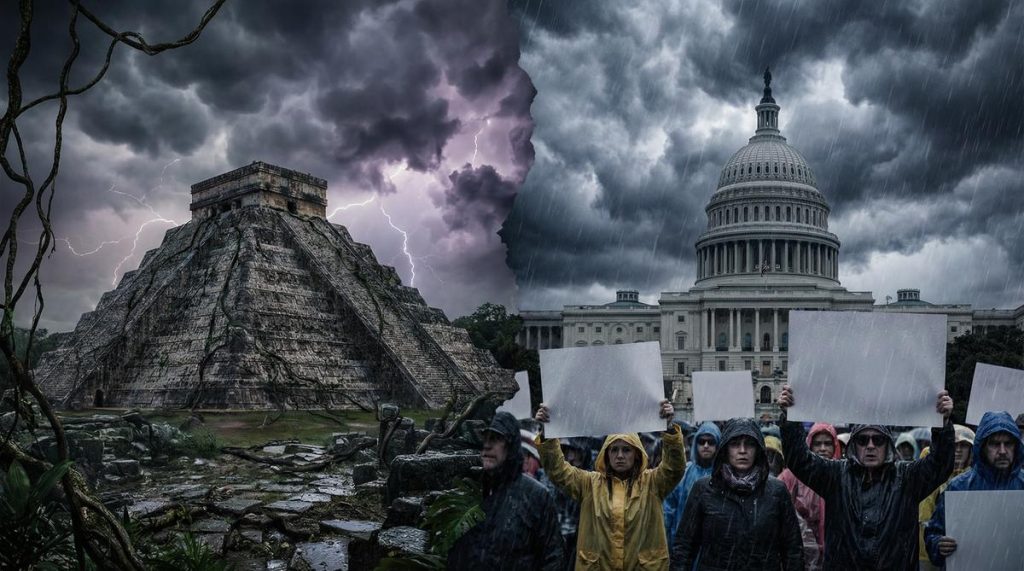
A special report from Shamus Gerry III
Another week, another shutdown crisis. The gears of the world’s most powerful government are grinding to a halt over petty squabbles and dug-in positions.
The Department of Homeland Security is furloughing staff. Global Entry is suspended. The machinery of state is sputtering—not from a foreign attack, but from its own internal rot.
It feels unprecedented. It is not.
More than a thousand years ago, in the dense jungles of Mesoamerica, the Maya civilization—a network of powerful city-states—tore itself apart. They didn’t face an outside invader. They weren’t wiped out by a single cataclysm.
They committed suicide by a thousand cuts: endless, escalating warfare between rival kingdoms, a political system that rewarded conflict over cooperation, and leaders who doubled down on destruction when they should have been building bridges.
This is the story of how a civilization’s inability to solve its own political crises led to its total collapse.
The Gilded Cage of the Maya Kings
The Classic Maya period (AD 250–900) was a marvel. Dozens of city-states—Tikal, Calakmul, Caracol, Copan—flourished across what is now Guatemala, Belize, Honduras, and southern Mexico. Their populations numbered in the tens of thousands.
They built towering pyramids that rivaled anything in the ancient world. They developed a complex writing system, a sophisticated calendar, and tracked the stars with breathtaking accuracy.
But their political system was a pressure cooker.
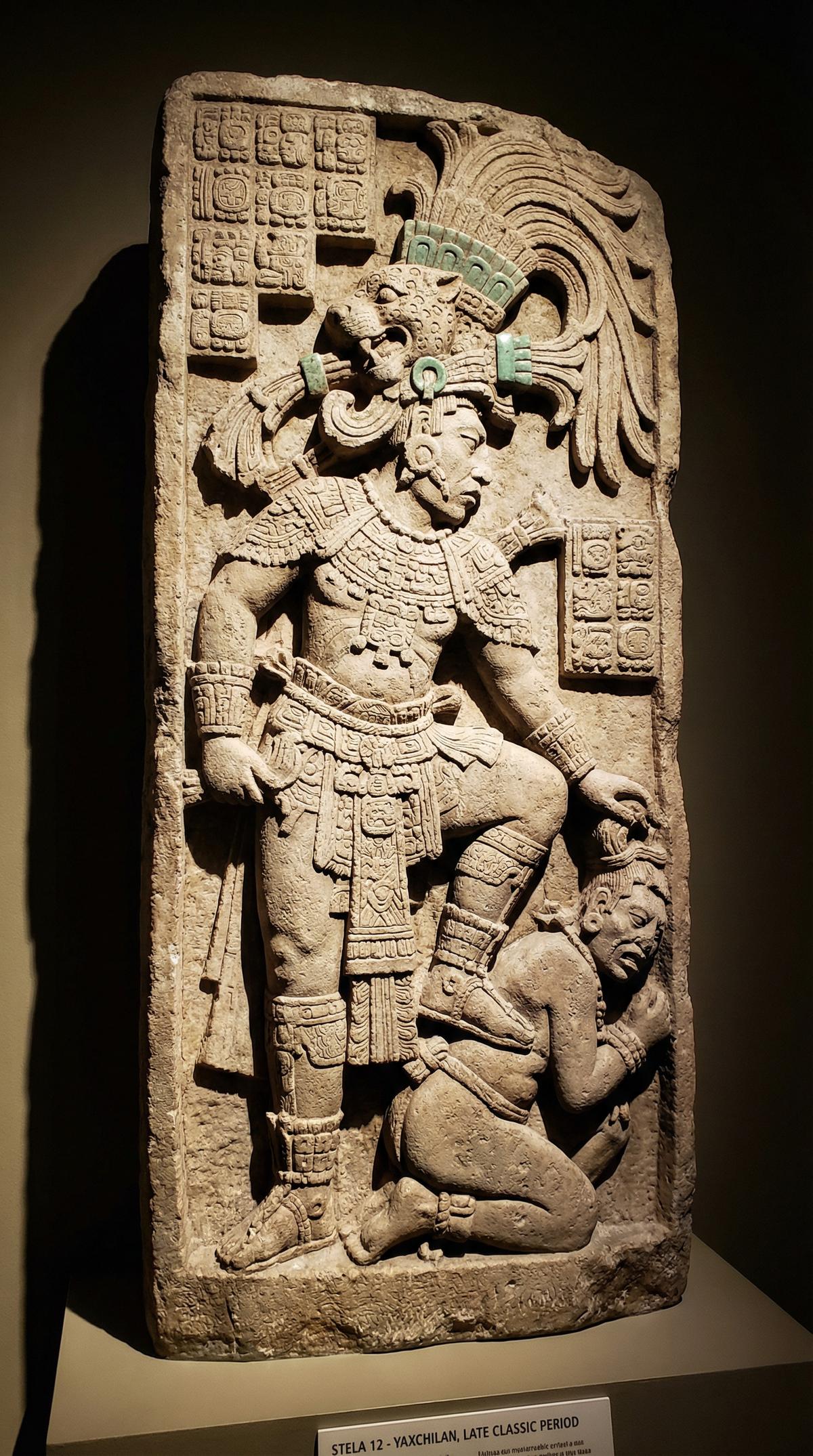
The Maya polities were locked in a state of endemic warfare. Alliances were constantly shifting, and rulers were judged by their ability to capture and sacrifice rival nobles. Power was not shared. It was seized.
Their world was one of constant, low-grade conflict, punctuated by major wars that could elevate one city-state over another for a generation. The goal wasn’t to create a unified empire. It was to dominate your neighbors, extract tribute, and secure captives for ritual sacrifice.
Power was a zero-sum game.
Sound familiar?
The Terminal Classic: A Spiral of Violence
Around the 8th and 9th centuries, something broke. The delicate balance of power shattered.
Archaeological evidence points to a dramatic escalation in warfare. Fortifications, once rare, began to appear around major cities. The art, once depicting grand rituals and astronomical observations, became dominated by scenes of battle and the humiliation of captives.
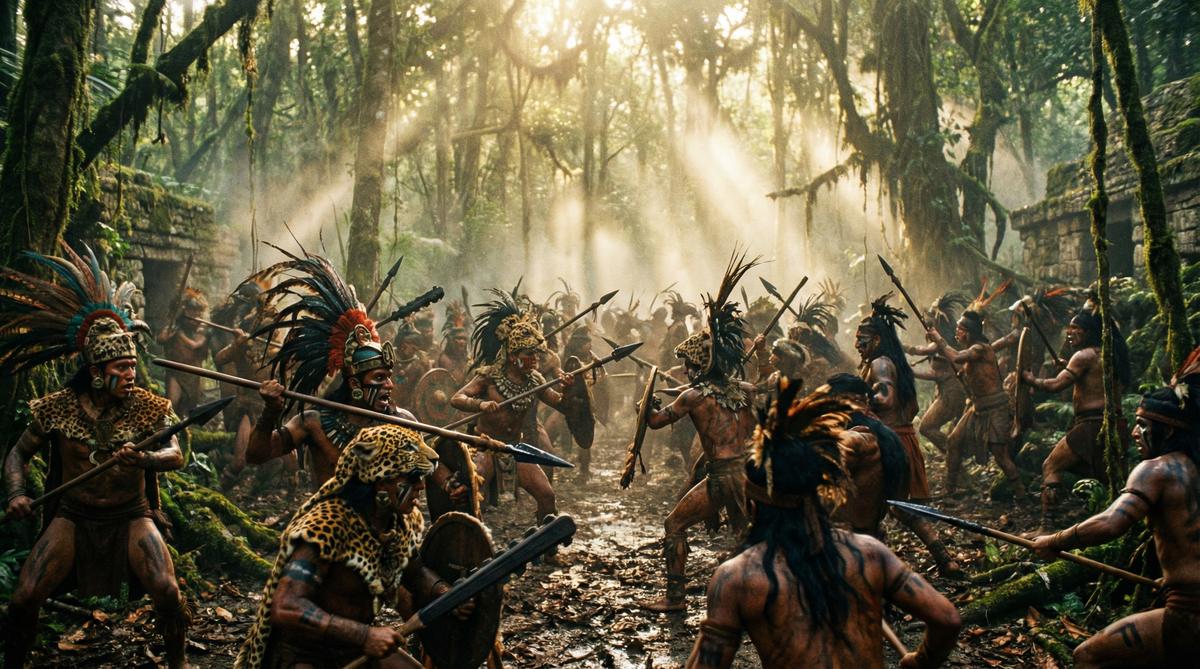
Scholars believe a combination of factors—including prolonged drought and environmental degradation—put immense stress on the system. But instead of banding together to solve these existential threats, the Maya kings did the only thing they knew how to do.
They went to war.
They doubled down on a failing strategy. They fought over scarce resources, raided their neighbors for food and tribute, and spilled oceans of blood to appease gods who seemed to have abandoned them.
The fighting became more desperate, more brutal, and more widespread.
Between AD 800 and 1000, the great cities of the southern lowlands were abandoned, one by one. Tikal’s population dropped from an estimated 60,000 to near zero. Calakmul, Copan, Palenque—all fell silent. Their monuments were swallowed by the jungle.
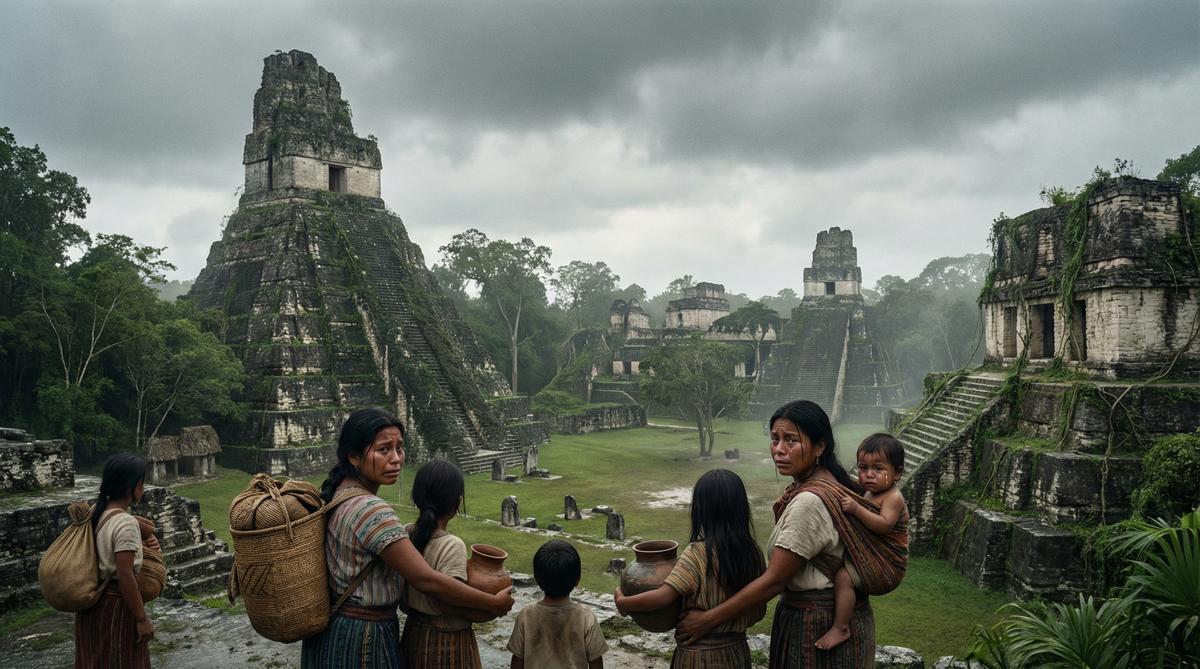
They had the knowledge to build pyramids that touched the sky, but they lacked the political wisdom to save themselves.
Their obsession with short-term, zero-sum political victories made them incapable of addressing the long-term crises that doomed them.
The Lesson: A Government at War With Itself Cannot Stand
Washington D.C. is not Tikal. The stakes are different.
But the human dynamics are eerily the same.
A political system that incentivizes conflict over compromise. A ruling class more interested in scoring points against their rivals than solving the nation’s problems. A constant state of manufactured crisis that paralyzes the government and erodes public trust.
The current partial shutdown—now entering its second week—is not an isolated event. It is a symptom. Since 1976, the U.S. government has experienced over 20 funding gaps. They are becoming more frequent, more bitter, and more damaging.
The Maya show us the endgame of this kind of political decay.
When a government is at war with itself, it cannot respond to real threats. It cannot manage the economy, secure the border, or maintain the infrastructure that underpins our entire way of life.
It becomes a gilded cage—impressive on the outside, but rotting from within.
The collapse is not a sudden explosion. It is a slow, grinding process of institutional failure—a gradual abandonment of the systems that make civilization possible. It is the quiet death of a society that has lost the ability to cooperate.
The Action: Declare Your Independence
We cannot fix the broken political machine in Washington. The incentives are too entrenched, the divisions too deep.
To believe that a new election or a different set of leaders will solve this systemic rot is to ignore the lessons of history.
The only rational response is to reduce your dependence on this failing system.
The Maya nobles, in their stone palaces, were the last to starve. The common people—those who lived on the land, who grew their own food, who maintained their own networks of trade and community—had a chance to adapt and survive.
The lesson is clear: self-reliance is not a lifestyle choice. It is a survival strategy.
This is why the 4ft Farm Blueprint is not just a guide to gardening. It is a declaration of independence. It is a practical, step-by-step plan to build a resilient household that can weather the storms of political and economic instability.
It is your personal insurance policy against a system that is consuming itself.
While the politicians in their marble halls play their zero-sum games, you can be building a foundation of true security for your family.
To understand the full scope of the challenges we face and the solutions available, explore our network of resources:
- SurvivalStronghold.com — Tactical preparedness and survival strategies
- SelfRelianceReport.com — Daily intelligence on self-sufficiency
- SevenHolistics.com — Natural health and wellness solutions
- HomesteaderDepot.com — Tools, guides, and community for modern homesteaders
Past empires. Present America. Same warning signs.