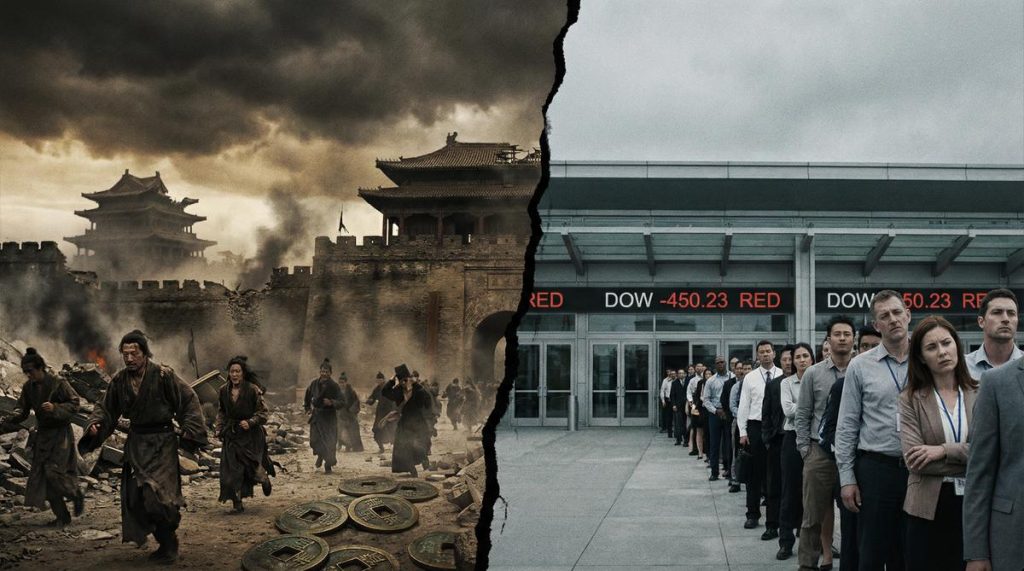
The numbers are in, and they are a brutal indictment of the American economy.
Ninety-two thousand jobs. Vanished. Not in a year, but in a single month. The February 2026 jobs report was not just a miss; it was a catastrophic failure that has sent shockwaves through Wall Street and Washington.
The unemployment rate is ticking up, and the labor force participation rate is falling.
This is not a recovery. This is a contraction. A silent, creeping crisis that the experts are now calling “stagflation” — a toxic cocktail of economic stagnation and rising prices, fueled by a disastrous war in Iran and a reckless tariff agenda.
But this is not a new story.
To understand the abyss America is staring into, we must travel back 1,900 years to the fall of one of the most powerful empires in human history: China’s Eastern Han Dynasty.
The Illusion of Prosperity
The Eastern Han Dynasty (25–220 AD) presided over a golden age of Chinese civilization. Its cities were marvels of the ancient world, its technology was unparalleled, and its wealthy elites lived in opulent comfort.
But beneath the glittering surface, the empire was rotting from within.
A massive and growing class of landless, unemployed peasants haunted the countryside.
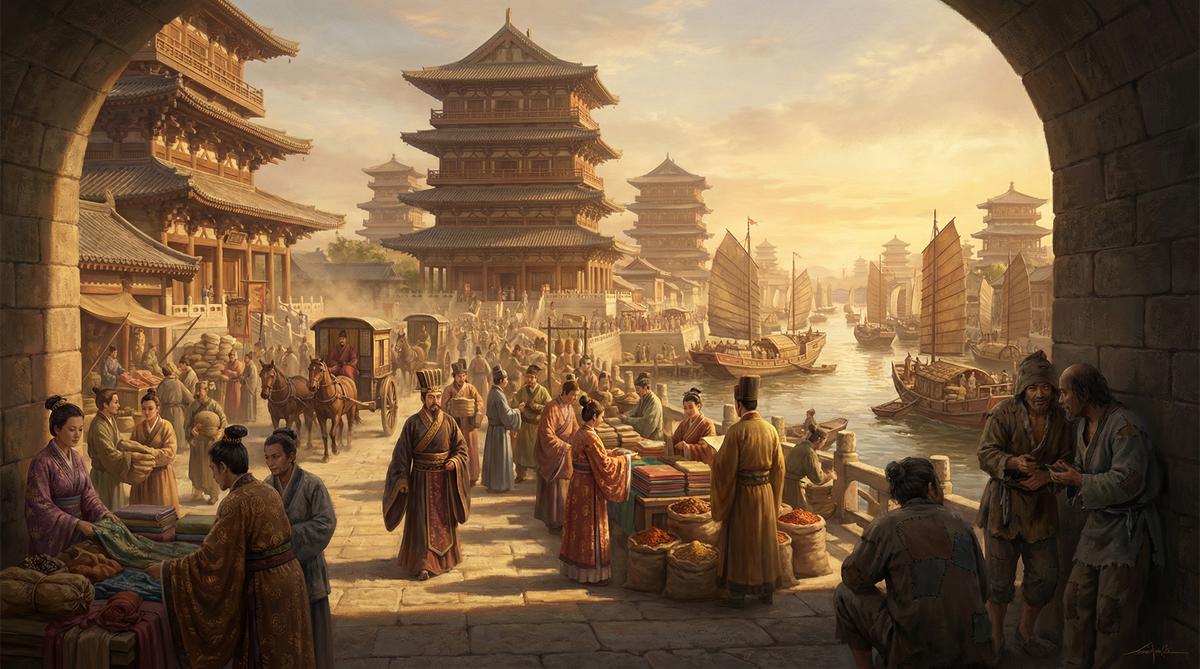
While the rich built lavish estates and enjoyed the fruits of a globalized economy, the common people were being systematically dispossessed. The government, captured by powerful landowners, did little to stop the bleeding.
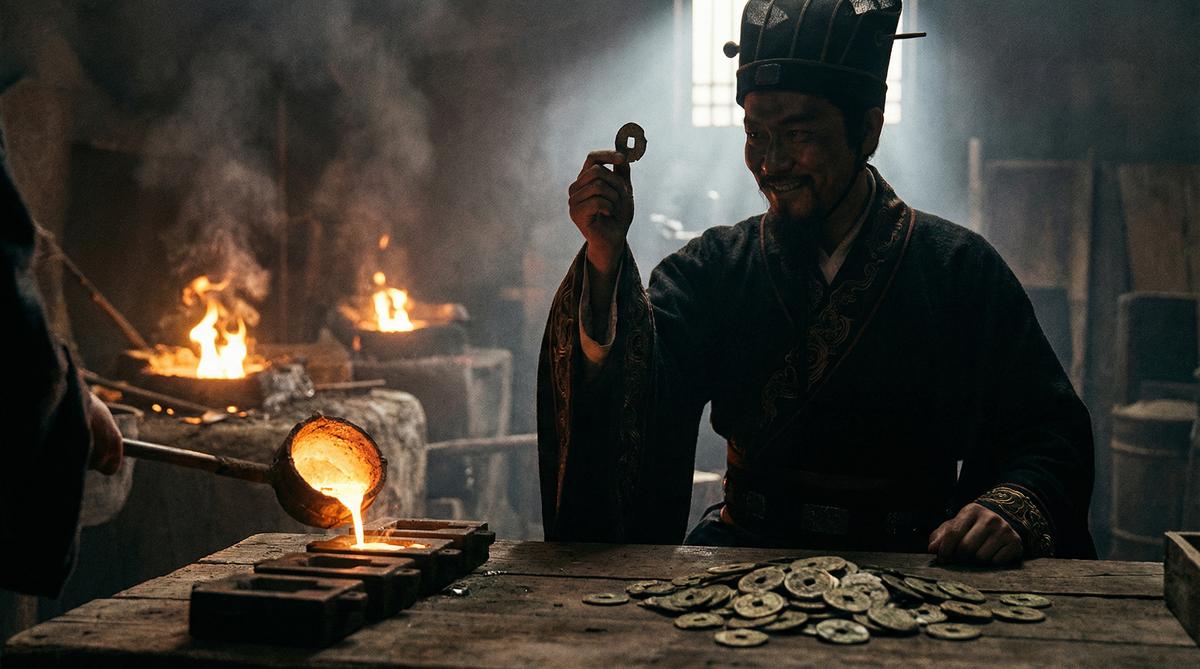
The Eastern Han court, plagued by corruption and eunuch intrigue, resorted to a desperate and timeless trick: they debased the currency. They minted worthless coins to pay their bills, unleashing a wave of inflation that destroyed the savings of the middle class and pushed the peasantry to the brink of starvation.
Sound familiar?
For decades, the illusion of stability held. The wealthy continued to get wealthier, the government continued to spend, and the signs of decay were ignored.
But an illusion, no matter how convincing, cannot last forever.
When a series of environmental disasters and peasant rebellions finally pushed the empire over the edge, it did not bend. It shattered. The Han Dynasty collapsed into the chaos and bloodshed of the Three Kingdoms period, a dark age that would last for centuries.
The Lesson of the Hollow Empire
The Eastern Han Dynasty did not fall because of an external invasion. It fell because its economic foundations had been hollowed out, leaving a fragile shell that was powerless to withstand the slightest shock.
This is the lesson for America today.
The loss of 92,000 jobs in a single month is not a temporary blip. It is a symptom of a much deeper disease. A disease of a “frozen” labor market, of a government that believes it can print its way to prosperity, and of a society that has become dangerously dependent on fragile, globalized systems.
“Well, that was ugly.” — Mark Hamrick, Senior Economic Analyst, Bankrate, commenting on the February 2026 jobs report. The unemployment rate rose to 4.4%. The labor force participation rate fell. December 2025 was quietly revised from a gain of 50,000 jobs to a loss of 17,000. With those revisions, 2025 was the first year to record five months of labor market contractions since 2010.
We are living in an empire of paper hands. An empire that has forgotten how to build, how to produce, how to create real value.
We have become a nation of consumers, not creators.
And when the next crisis comes — and it will come — the paper wealth that we have accumulated will be worthless. The illusion of stability will shatter, just as it did for the Han.
The Turn: The Path to Resilience
It is easy to look at this pattern and feel a sense of despair. To see yourself as a pawn in a game of empires.
But history teaches another, more powerful lesson. When the great, centralized systems fail, they create a vacuum. And into that vacuum rushes the opportunity for something new.
The survivors of the Han Dynasty’s collapse weren’t the ones who simply hid. They were the ones who rebuilt, who focused on their local communities, who strengthened their own skills, and who created resilient networks of trade and mutual support.
This is not a call to hide from the world. It is a call to build a better one, starting in your own backyard.
The Action: The Blueprint for Hope

Building a resilient future starts with a single, powerful step: taking control of your own food supply. The 4ft Farm Blueprint is not just about survival; it’s about sovereignty. It’s the first chapter in your family’s story of independence, a story where you are the builder, not the victim.
True resilience, however, goes beyond the garden. It requires knowledge and a community of like-minded individuals. The Self Reliance Report and Survival Stronghold provide the intelligence and tools you need to navigate the coming chaos, while Homesteader Depot offers the practical supplies for a self-sufficient life.
And as we face a future of economic uncertainty, our health becomes our most valuable asset. Seven Holistics offers a path to wellness that is independent of a fragile and failing healthcare system.
The empire of paper hands will fall. But the empire of strong hands — the hands of builders, creators, and producers — will endure.
Join us in building that future.