The numbers hitting American households this week are brutal.
President Trump’s new tariff regime is now projected to cost the average family $600 to $700 in 2026 alone.
Manufacturing jobs — the very sector these policies were meant to protect — have actually declined. Supply chains are fracturing. And with the U.S. burning up to $2 billion a day in the Middle East, the New York Fed’s DSGE model now puts the probability of a recession at a staggering 35.8% to 49%.
We are trying to wall ourselves off from the world, and it is costing us everything.
But we are not the first global superpower to try and tax our way to isolation.
Over 500 years ago, the most advanced, wealthy, and powerful empire on Earth decided it no longer needed the rest of the world. They burned their fleets, closed their ports, and built the most famous wall in human history.
They were the Ming Dynasty of China.
And their desperate attempt at economic protectionism didn’t save their empire. It destroyed it.
The Masters of the Oceans
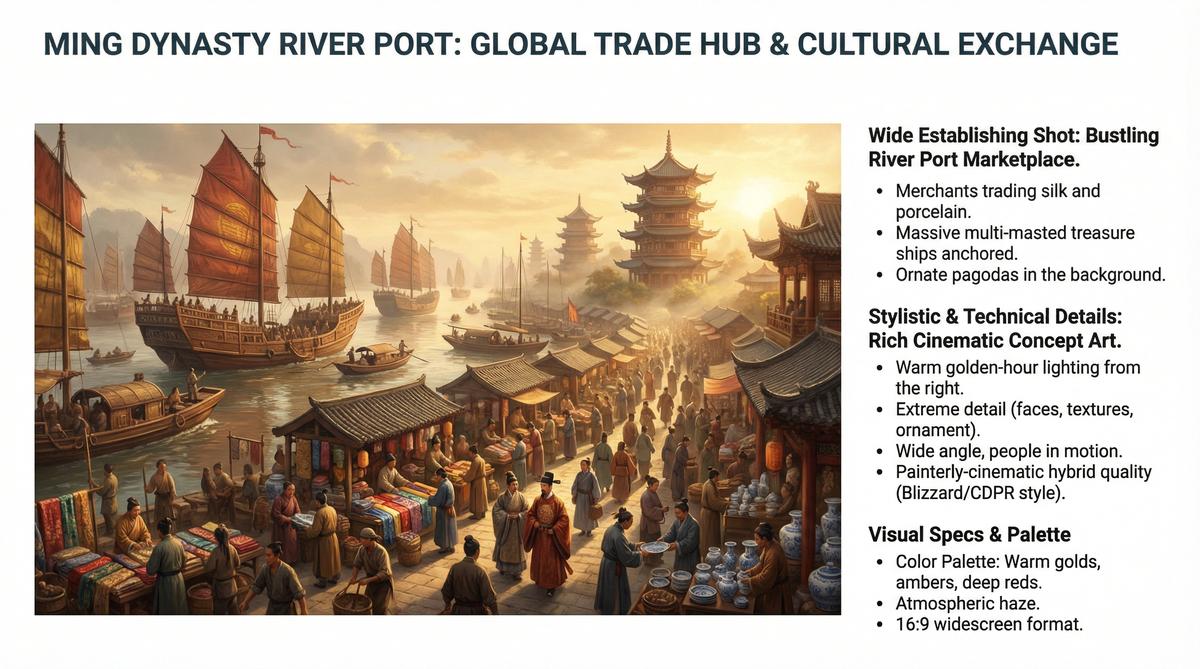
In the early 1400s, the Ming Dynasty was the undisputed center of the global economy.
Decades before Columbus was even born, Chinese Admiral Zheng He commanded a “Treasure Fleet” of over 300 massive ships, projecting Ming power from Southeast Asia all the way to the coast of Africa. They controlled the flow of silk, porcelain, and spices that the rest of the world depended on.
“The Ming Dynasty at its peak produced more than 30% of the world’s GDP. They were the factory of the world, and their currency was the global standard.”
They were an economic juggernaut without equal.
But the Ming leadership grew paranoid. They faced border skirmishes with the Mongols to the north and Japanese pirates to the east. The cost of maintaining their massive military and global trade network began to strain the imperial treasury.
So, the Emperor made a fatal miscalculation.
He decided that foreign trade was a vulnerability, not a strength.
The Great Retreat
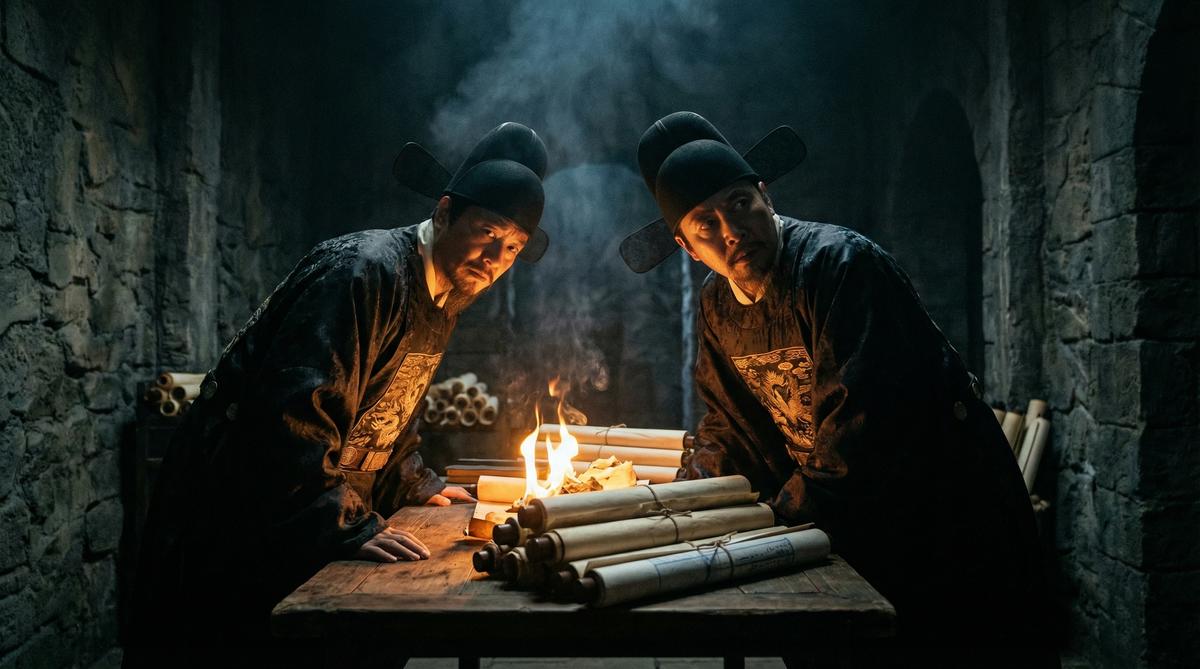
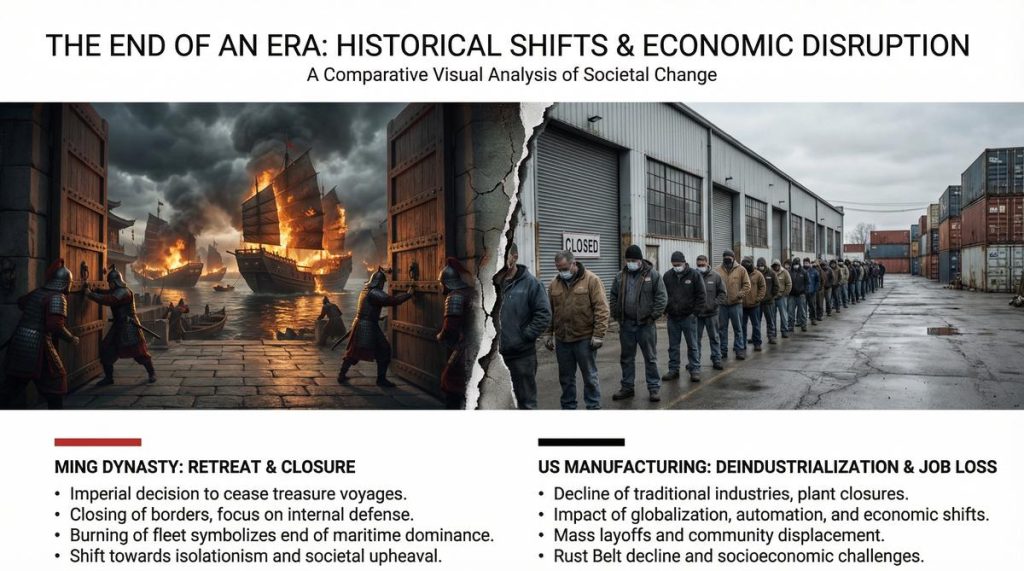
In a desperate bid for self-reliance, the Ming Dynasty enacted the Haijin — the “Sea Ban.”
They made it a capital offense to build a ship with more than two masts. They burned the magnificent Treasure Fleet. They closed their ports to foreign merchants and attempted to replace global trade with strict internal production quotas.
They built the Great Wall of China to keep the world out.
But the economic reality was unforgiving. By cutting off foreign trade, the Ming government choked off their primary source of silver — the very currency their economy ran on.
The result was catastrophic deflation.
Farmers couldn’t pay their taxes. Artisans went bankrupt. The government, desperate for revenue to fund their endless border wars, began squeezing the peasantry with crushing internal taxes.
When a series of brutal droughts hit in the 1620s, the hollowed-out economy completely collapsed. The government couldn’t afford to pay its soldiers, who promptly mutinied and joined the starving peasants in open rebellion.
In 1644, the last Ming Emperor hung himself from a tree in the imperial garden as rebel forces breached the gates of Beijing.
They didn’t fall to a superior foreign military. They fell because they starved their own economic engine.
The Echoes in Washington
Look at the United States today.
We are currently fighting a multi-front economic war, slapping tariffs on allies and adversaries alike. We are retreating from global trade agreements while simultaneously burning billions in overseas military conflicts.
The parallels are not subtle.
Just like the Ming Dynasty, we are trying to use protectionism to fund an overextended empire. The $700 tariff tax hitting American families this year is just the beginning. As supply chains fracture and input costs skyrocket, the price of everything — from groceries to housing — will continue to surge.
Deloitte estimates that the current tariff regime will push inflation up and significantly slow spending growth throughout 2026. Goldman Sachs has raised U.S. recession odds to 25%. Moody’s puts the probability at 49%.
We are watching the real-time hollowing out of the American economic engine.
And just like the Ming emperors, our political class is paralyzed by infighting — completely disconnected from the economic reality facing the citizens they claim to represent. While Washington debates the next round of tariffs, the rest of the world is quietly building new trade networks that exclude the U.S. dollar entirely.
China, the very nation our tariffs are aimed at, saw its trade surplus exceed $1 trillion in 2025 — simply by redirecting to non-U.S. markets. The intended loser adapted. We are the ones paying the price.
The Path to Resilience

It is easy to look at this pattern of imperial retreat and feel a sense of despair.
But the collapse of a centralized system is not the end of the world — it is the beginning of local sovereignty.
When the Ming Dynasty’s central economy failed, the families who survived were the ones who had already decoupled from the imperial system. They were the ones who grew their own food, secured their own water, and built local networks of mutual support.
You cannot control Washington’s tariff policies, but you can control your own supply chain.
The coming economic contraction is not a reason to panic; it is a mandate to build.
Every dollar you invest in your own resilience is a dollar insulated from the next round of government-mandated inflation. Every seed you plant is a hedge against the supply chain disruptions that tariff wars inevitably create.
The empire may be retreating, but your family doesn’t have to. If you want a step-by-step system for turning even a small backyard into a resilient food-producing asset, the 4ft Farm Blueprint is exactly what you need. It’s the same system that thousands of American families are using right now to build real independence — one raised bed at a time.
The Ming Dynasty built a wall and starved. Build a garden instead.
And if you want to stay ahead of the economic patterns unfolding in real time, The Ready Report and The Self Reliance Report are publishing daily intelligence on exactly what’s coming — and how to position yourself ahead of it.
The system is fracturing. The question is whether you’re building something that can stand on its own.