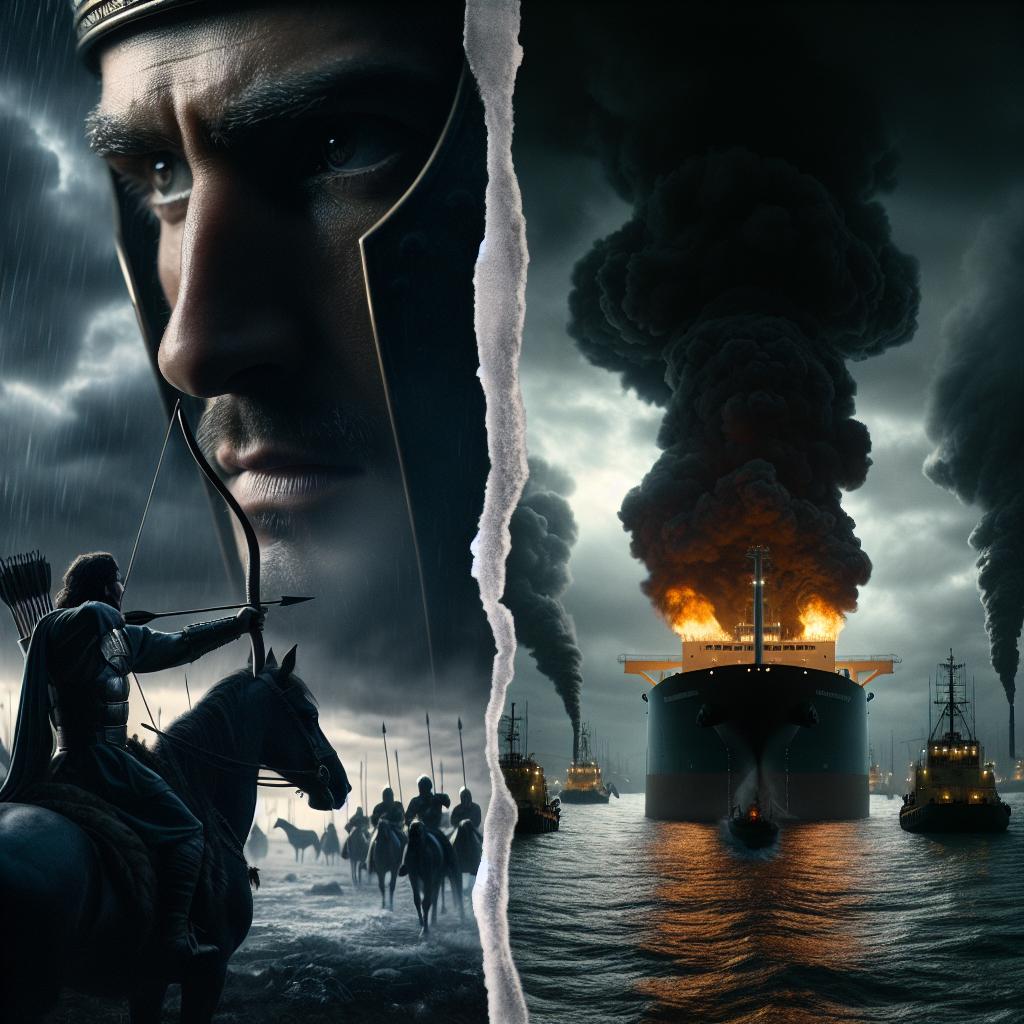
For nearly 500 years, the Scythian Empire controlled the most critical resource in the ancient world. They didn’t build great cities or massive monuments. Instead, they controlled the flow of energy.
In the ancient world, energy meant two things: grain to feed the empires of the Mediterranean, and horses to power their militaries. The Scythians controlled the Pontic Steppe, the vast grasslands north of the Black Sea that served as the breadbasket and breeding ground for the known world.
They were the undisputed masters of the ancient supply chain.
By controlling the trade routes, the Scythians extracted massive wealth from the Greeks, the Persians, and the Macedonians. They grew rich not by producing, but by tolling the production of others. They used their unmatched military mobility to protect these routes and punish anyone who tried to bypass them.
But by the 3rd century BC, the Scythian Empire began to collapse. And they didn’t fall because a superior army defeated them in a single, decisive battle.
They fell because they overextended their military to the point that they destroyed the very trade routes that funded their empire.
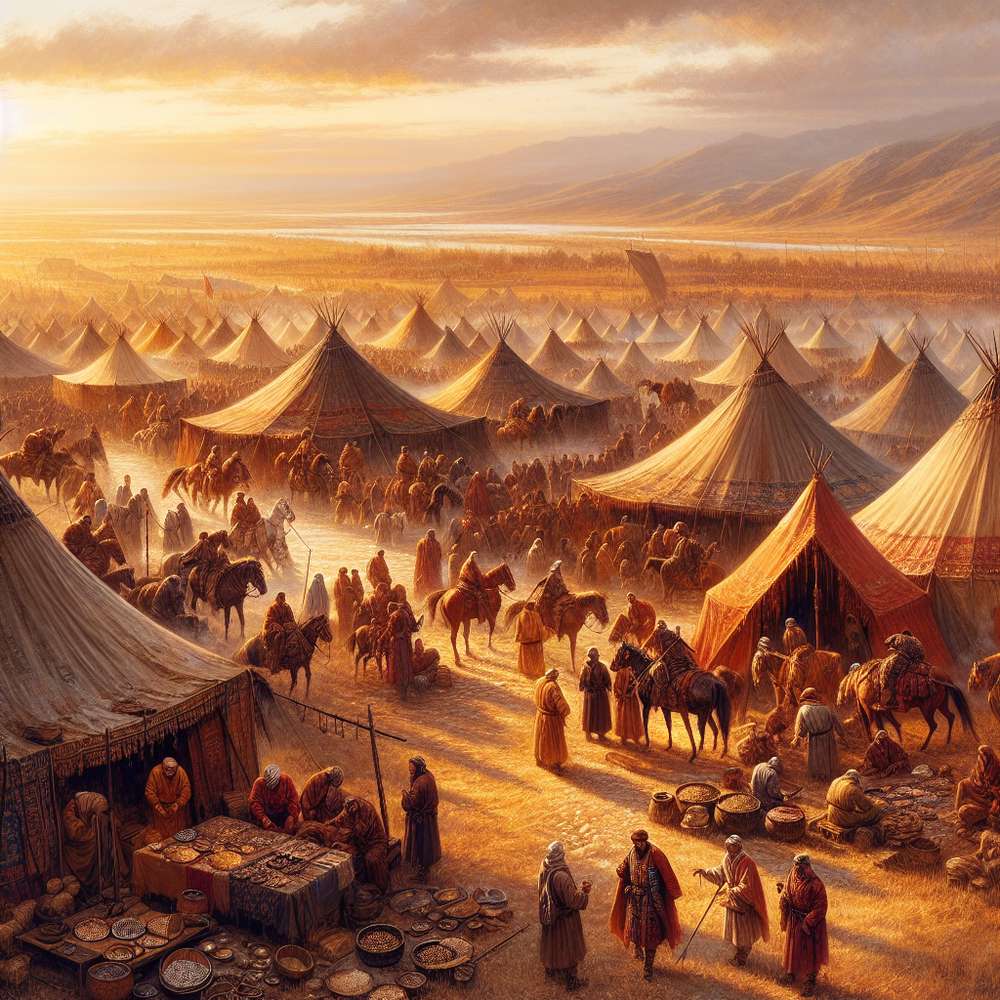
The Trap of Overextension
The Scythians made a fatal miscalculation. They believed their military power was the source of their wealth, when in reality, their wealth was the source of their military power.
As they expanded their raids deeper into the Middle East and Eastern Europe, they created enemies on all sides. To fund these endless conflicts, they squeezed their trade partners harder. They demanded more tribute, disrupted local economies, and made the cost of doing business through the Pontic Steppe unbearably high.
They turned their greatest asset into a liability.
Eventually, the world decided the Scythian monopoly was too expensive to maintain. A related nomadic group, the Sarmatians, began moving in from the east. The Macedonians pushed from the west. But the fatal blow wasn’t military—it was economic.
The trade routes shifted. The Greeks found new sources of grain. The Persians found new sources of horses. The Scythians, exhausted by endless wars and suddenly cut off from their revenue streams, simply withered away. By the 2nd century BC, the once-mighty masters of the steppe were reduced to a minor kingdom in Crimea.
They had closed their own chokepoint.
The Modern Pontic Steppe
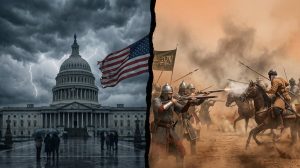
Today, America is falling into the exact same trap. But instead of grain and horses, the modern empire runs on oil and the dollar.
For decades, the United States has used its military dominance to protect the global energy supply chain, specifically the Strait of Hormuz. This 21-mile-wide channel in the Persian Gulf is the modern equivalent of the Pontic Steppe. Nearly one-fifth of the world’s crude oil passes through it.
Control the Strait, and you control the world.
But just like the Scythians, America has overextended itself. The recent escalation of the war in Iran has done the unthinkable: it has effectively closed the very chokepoint the U.S. military was supposed to protect.
The economic fallout has been immediate and devastating. Oil prices have surged past $100 a barrel. Gas prices have spiked by 80 cents a gallon, draining an additional $300 million from American families every single day. Jet fuel is up 85%.
The empire that built its power on protecting global energy flows is now the primary reason those flows are disrupted.
The Cost of the Energy Trap
The consequences of this self-inflicted wound are rippling through the American economy.
Goldman Sachs has raised the probability of a U.S. recession to 25%, while Moody’s Analytics warns of a 49% chance of an economic downturn in the next 12 months. The S&P 500 has suffered four straight weeks of losses.
The math of empire is breaking down.
To fund this conflict, the national debt has crossed a staggering $39 trillion. In fiscal year 2026, net interest payments on that debt are projected to exceed $1 trillion. We are borrowing money we don’t have to fight a war that is destroying the energy supply we desperately need.
In a twist of supreme irony, the U.S. has even been forced to ease sanctions on Iranian oil just to cool the surging energy prices caused by its own military actions. The Scythians would recognize this desperation. It is the frantic flailing of an empire that realizes it has accidentally cut its own throat.

Blueprint for Hope
The collapse of the Scythian monopoly was devastating for those who depended entirely on their trade routes. When the grain stopped flowing, cities starved.
But for those who had built local resilience, the collapse of the empire was merely a transition. The people who survived the shift were the ones who didn’t rely on a centralized power to feed and fuel them.
The solution to a collapsing empire is local sovereignty.
You cannot control the Strait of Hormuz. You cannot stop the national debt from spiraling past $39 trillion. But you can control your own supply chains. You can build the resilience that makes you immune to the geopolitical blunders of an overextended empire.
Here is how you start building your own sovereignty today:
1. Secure Your Food Supply
When global energy prices spike, the cost of transporting food skyrockets. The fertilizer shock is already working its way through the agricultural system. The most radical act of defiance is to grow your own calories. The 4ft Farm Blueprint shows you exactly how to build a high-yield, space-efficient food system in your own backyard, insulating your family from the coming grocery store shocks.
2. Build Tangible Wealth
As the empire prints trillions to fund its wars, the dollar will continue to lose its purchasing power. You need assets that exist outside the digital banking system. Homesteader Depot provides the physical tools and equipment necessary to maintain a productive, self-reliant property that holds its value regardless of what the stock market does.
3. Master Essential Skills
The Scythians lost their power when they forgot how to produce and only knew how to extract. True security comes from the ability to make, fix, and provide. Survival Stronghold offers the critical knowledge and training needed to handle emergencies, secure your property, and protect your family when centralized systems fail.
4. Protect Your Internal Sovereignty
A stressed, unhealthy body is a dependent body. When pharmaceutical supply chains fracture due to global trade disruptions, your health is your first line of defense. Seven Holistics provides the natural protocols and herbal knowledge to maintain your wellness independently, while Freedom Health Daily keeps you informed on the latest threats to medical freedom.
5. Stay Ahead of the Pattern
The collapse of the Scythian Empire wasn’t a surprise to those who knew what to look for. The signs were there for decades. Self Reliance Report tracks these historical patterns and provides actionable intelligence so you can prepare before the crisis hits the mainstream news.
The empire has closed its own chokepoint. The energy shock is here. Do not wait for the system to fix itself. Build your resilience now.