A special report from Shamus Gerry III
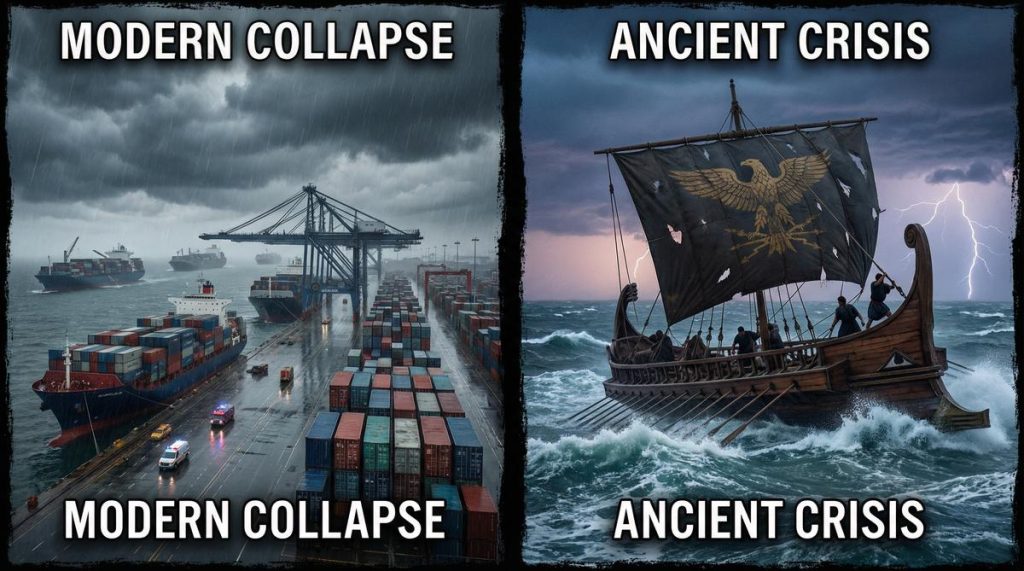
It’s a quiet tension every American feels in the grocery store. One week, eggs are affordable; the next, the shelf is empty. A major bridge collapses, and suddenly, fresh produce from California is a luxury item on the East Coast.
We are told these are temporary shocks. Glitches in the system.
But what if they aren’t glitches? What if they are tremors, warning of a much larger earthquake to come? A new report from industry analyst Xeneta warns that 2026 is defined by “persistent volatility and disruptions embedded in the global economy.” They point to the reopening of the Red Sea, geopolitical tensions, and sudden policy shifts as proof that our supply chains are balanced on a knife’s edge.
They are more fragile than we could ever imagine.
This is not a new story. It is a story that has played out time and time again throughout history. Two thousand years ago, the Roman Empire built the most sophisticated supply chain the world had ever seen. It was a marvel of logistics, a system that fed a million people for centuries. And when it broke, it didn’t just bend. It shattered, dragging the world’s greatest empire into a dark age.
This is the story of the Cura Annonae. And it is a terrifying warning for us today.
The Grain That Built an Empire
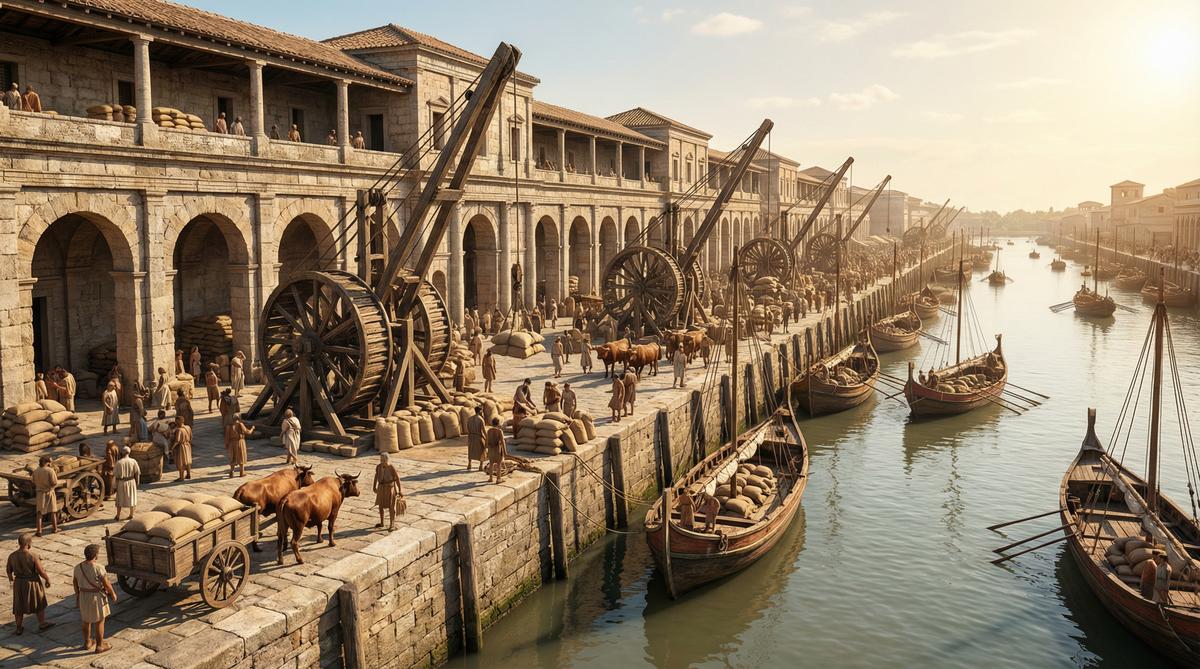
The Cura Annonae, or “care of the grain,” was the logistical backbone of Rome. It was a state-run welfare program of staggering scale, responsible for procuring and distributing vast quantities of grain to the citizens of Rome, for free or at a heavily subsidized price.
It was the ultimate entitlement program, and it made the Empire possible.
To feed its massive population, Rome relied on a constant stream of grain ships from its most fertile provinces, primarily Egypt and North Africa. Hundreds of ships, every day, crisscrossed the Mediterranean in a perfectly choreographed ballet of logistics. Special docks, massive warehouses at Ostia, and an army of bureaucrats were all dedicated to this single, critical task.
“The stability of the Roman state rested on the reliability of the Annona. A delay of even a few weeks could lead to riots in the streets. A failure of a single harvest could mean starvation.”
For centuries, the system worked. It was a testament to Roman engineering, organization, and raw power. The grain dole kept the Roman mob content, the city fed, and the emperors secure on their thrones. It was the system that allowed Rome to grow into a metropolis of a million people, a feat unmatched in the West for over a thousand years.
But this strength was also a profound weakness.
Rome had outsourced its most critical function: feeding itself. The city was utterly dependent on a long and vulnerable supply chain, a chain that stretched across a thousand miles of open water.
The Day the Ships Stopped Coming
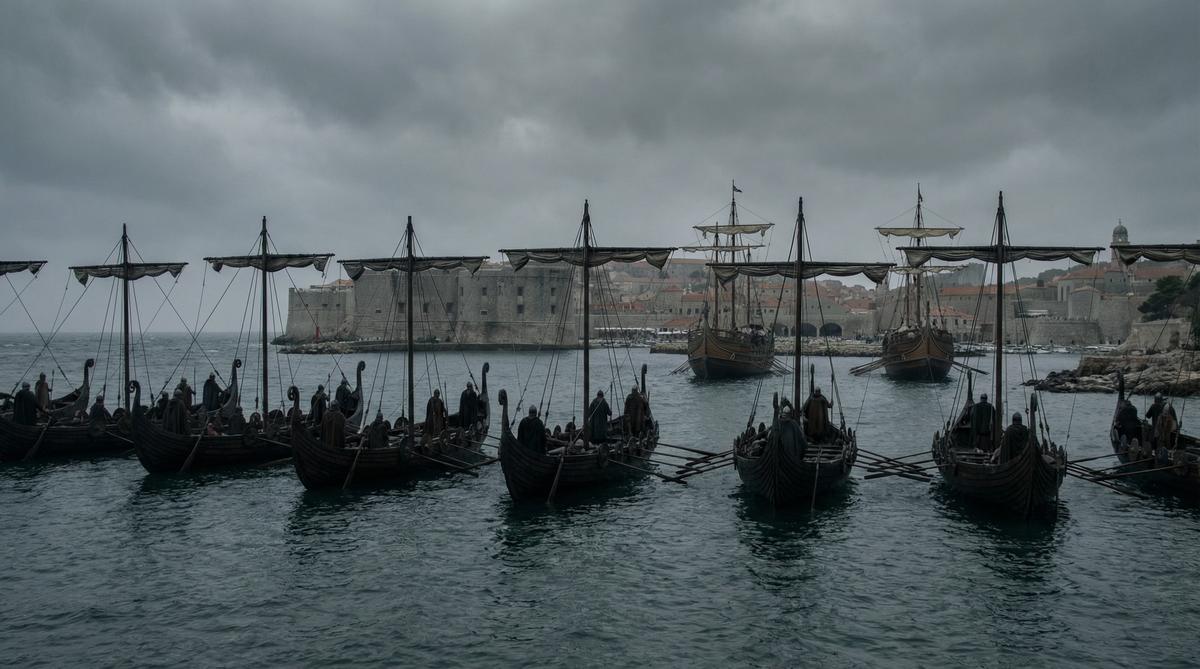
The beginning of the end came in the 5th century AD. The Western Roman Empire was weakening, its borders under pressure from every direction. In 439 AD, a Vandal army under the command of King Gaiseric crossed the Strait of Gibraltar and captured the province of Africa — the breadbasket of Rome.
Suddenly, the unthinkable happened. The grain ships stopped coming.
The loss of North Africa was a catastrophic blow. It wasn’t just a territorial loss; it was the severing of Rome’s lifeline. The Vandals now controlled the source of the city’s food. They could, and did, use it as a weapon.
“The capture of Carthage by the Vandals in 439 was the single most devastating event in the decline of the Western Roman Empire. It immediately and permanently crippled the Annona system.”
Panic gripped the city of Rome. The grain dole, which had been a guarantee for centuries, collapsed. Prices skyrocketed. Famine, a distant memory for generations, became a brutal reality.
The government, deprived of its primary tool of social control, was powerless. Riots erupted. The social fabric of the city, held together by free bread, began to tear apart.
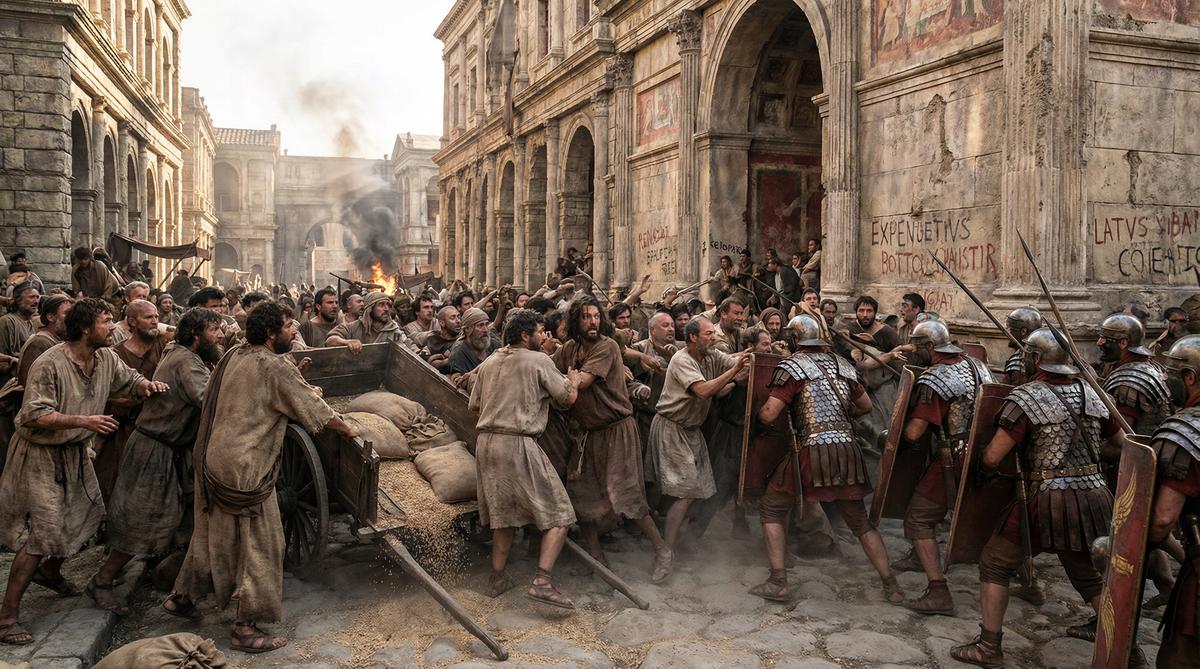
The complex system, once a symbol of Roman might, had become an engine of its own destruction.
The failure of the Annona was not the sole cause of Rome’s fall, but it was the fatal accelerator. It exposed the hollowness of the Empire’s power. A government that cannot feed its own people is no government at all.
The Lesson: Complexity is Fragility
Today, we live in a world far more complex than ancient Rome. Our supply chains are not measured in hundreds of ships, but in hundreds of thousands. They span not just the Mediterranean, but the entire globe.
A single smartphone contains minerals from a dozen countries, assembled in another, and shipped through a dozen more before it reaches your hand.
We have built a global Annona, a system of breathtaking complexity and terrifying fragility.
The Xeneta report is a clear warning. The “persistent volatility” they describe is the modern equivalent of the Vandal threat. Whether it’s a geopolitical crisis in the Red Sea, a new round of tariffs, or a pandemic that shuts down global manufacturing, the result is the same: the ships stop coming on time.
“For supply chains, this translates into persistent uncertainty around volumes, inventory levels, and capacity needs — making long-term planning increasingly difficult.” — Xeneta, February 2026
We saw it during the COVID-19 pandemic with shortages of everything from toilet paper to semiconductors. We see it every time a major port goes on strike or a critical bridge is closed for repairs. The intricate, just-in-time system that powers our modern world is incredibly efficient, but it has no slack. It has no resilience.
When the system breaks, it breaks completely.
Just as Rome’s dependence on Egyptian grain was its undoing, our dependence on a globalized, hyper-efficient supply chain is our greatest vulnerability. We have forgotten the most basic lesson of history: true security comes from local production and self-reliance.
The Action: Build Your Own Granary
When the institutions that promise to provide for you are revealed to be fragile, the only sane response is to become your own provider. The time to prepare is not when the shelves are already empty. The time is now.
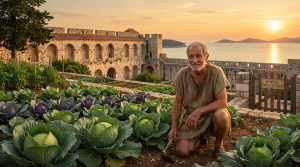
True security is not found in a complex global system you cannot control. It is found in the soil in your own backyard. It is the independence of knowing you can feed your family, no matter what happens at a shipping port halfway around the world.
That is why we champion the 4ft Farm Blueprint. It is more than a gardening system. It is a declaration of independence from a fragile and failing system. It is a blueprint for building your own personal granary, a resilient homestead that can weather the coming storms.
To understand the full scope of the challenges we face and the solutions available, explore our network of resources:
- HomesteaderDepot.com: Tools and knowledge for the self-reliant life.
- SelfRelianceReport.com: In-depth analysis of the threats to our freedom.
- SurvivalStronghold.com: Strategies for protecting your family in a crisis.
- SevenHolistics.com: Health independence from a broken medical system.
- TheReadyReport.com: Up-to-the-minute preparedness news and alerts.
- FreedomHealthDaily.com: Daily health news for the freedom-minded.
The Romans learned that a supply chain without resilience is a roadmap to ruin. We are being taught the same lesson today.
It is time to build something that cannot be broken.