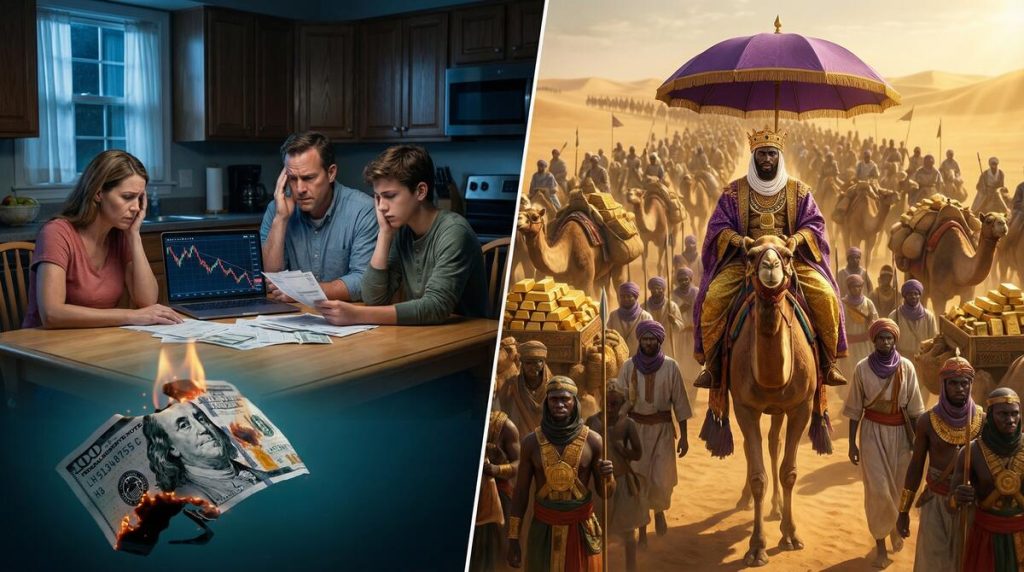
The U.S. national debt just crossed $38.8 trillion. The government is borrowing $7.2 billion per day just to keep the lights on.
Meanwhile, central banks around the world are quietly buying gold at a record pace, and famed investors like Peter Schiff are warning that the U.S. dollar is on the verge of a historic collapse.
It feels unprecedented. It feels like we are teetering on a financial cliff no one has ever seen before.
But it has happened before.
Almost 700 years ago, the richest man who ever lived — the ruler of a West African empire that controlled more than half the world’s gold — single-handedly crashed the global economy with an act of unimaginable generosity.
His story is a chilling warning of what happens when a currency is no longer trusted, and an empire’s wealth becomes its own undoing.
The Story: The Richest Man in History
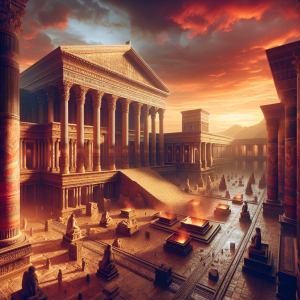
His name was Mansa Musa, and he was the emperor of Mali in the 14th century. His kingdom was the source of so much gold that to this day, he is considered the wealthiest human being in all of history.
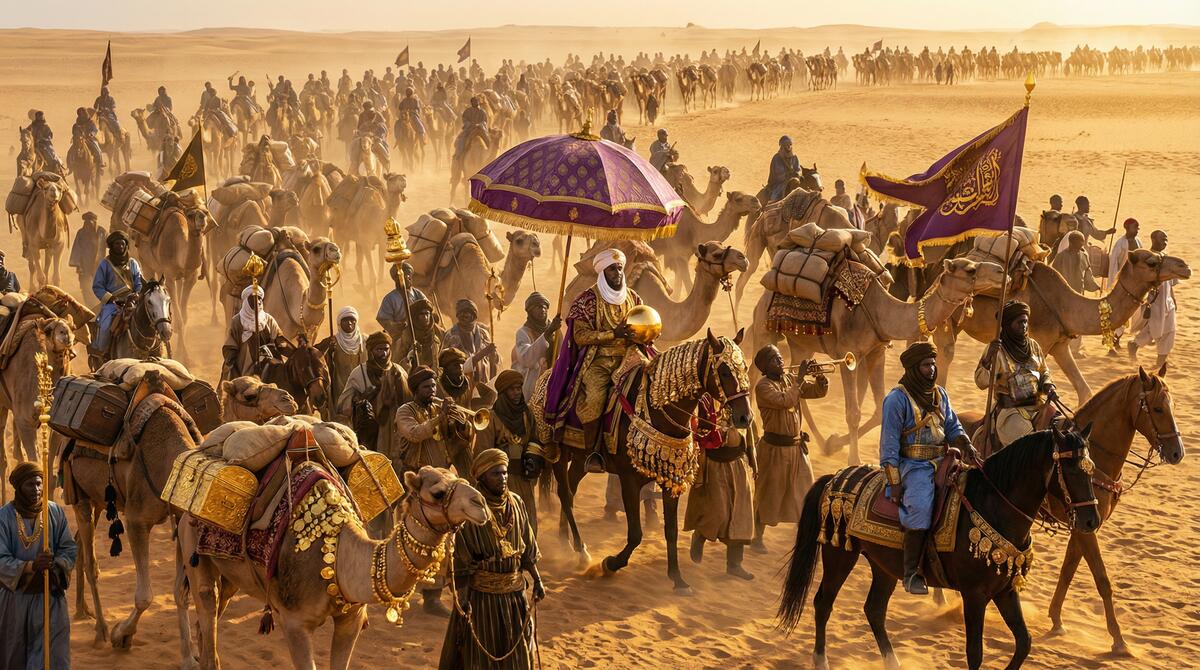
In 1324, Mansa Musa, a devout Muslim, embarked on the Hajj, the pilgrimage to Mecca. But he did not travel lightly.
His caravan was a moving city of 60,000 people, including 12,000 attendants, each carrying bars of solid gold. Hundreds of camels followed, each laden with hundreds of pounds of gold dust.
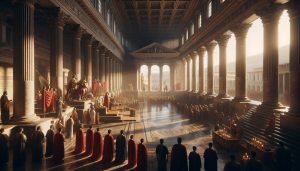
As he traveled, he gave it away. He showered the poor with gold. He built a new mosque every Friday. When he passed through Cairo, he spent and gave away so much gold that he completely destroyed its value.
The price of gold plummeted, triggering a wave of inflation that shattered the Egyptian economy for over a decade. One man’s generosity broke the known world’s financial system.
The value of gold — the one thing everyone trusted — was shown to be a fantasy that could be erased overnight by one man’s whim.
Mansa Musa had shown the world that the ultimate power was not holding gold, but creating it. And destroying it.
But the story does not end there. After Mansa Musa’s death, his successors could not hold the vast empire together. His sons and grandsons were weak, and the empire was plagued by internal divisions and succession crises. The regional governors, once loyal, began to break away.
The empire that had once controlled the world’s gold supply began to crumble from within. And then came the external shock.
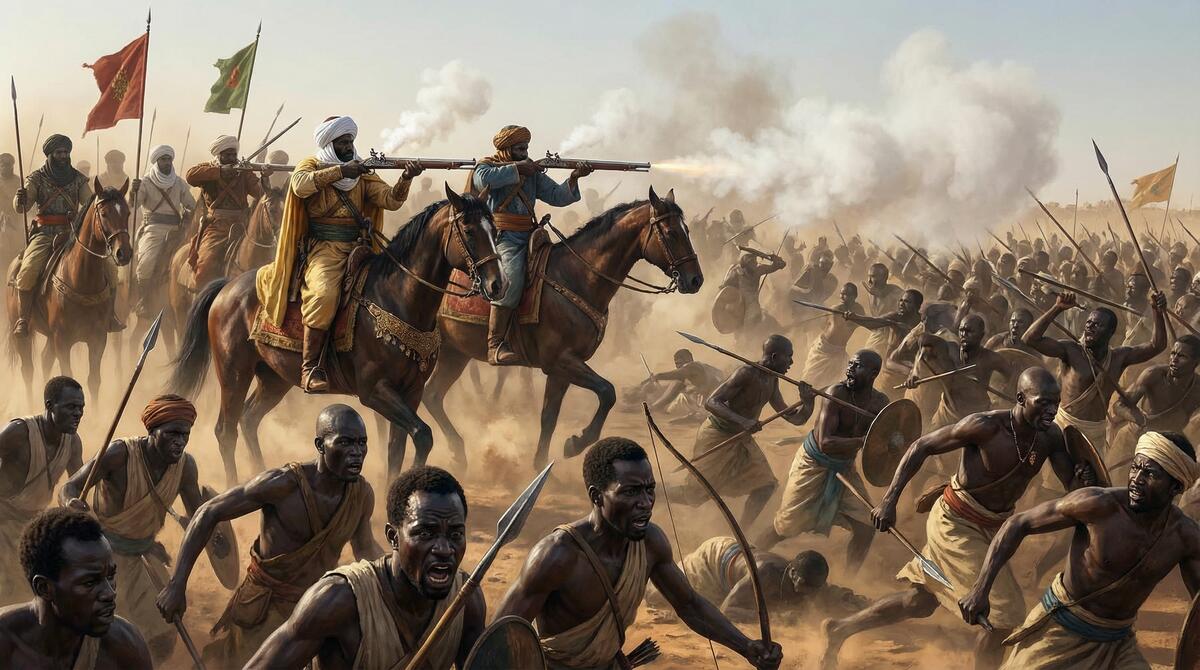
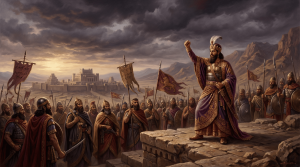
In 1591, the Sultan of Morocco, seeing a fractured and weakened Mali, invaded with a small army armed with modern firearms. The once-mighty Malian army, equipped with spears and swords, was shattered at the Battle of Tondibi.
The empire of gold, the wealthiest civilization on Earth, collapsed into dust.
The Lesson: When the Gold Standard Is a Lie
America’s gold is not a yellow metal. It is the U.S. dollar. It is the world’s reserve currency — a piece of paper that the entire global economy has trusted for 80 years.
And we are treating it with the same reckless abandon as Mansa Musa.
We are not giving it away to the poor. We are printing it to fund endless wars, to service a debt that can never be repaid, and to prop up a financial system that is a hollowed-out shell of its former self.
The U.S. national debt is not just a number. It is a measure of our nation’s broken promises.
“The U.S. has never experienced an economic shock as indebted as we are today. This situation leaves the U.S. immensely vulnerable.” — Committee for a Responsible Federal Budget, March 2026
The national debt has now crossed $38.86 trillion — rising $2.64 trillion in a single year, or $7.23 billion every single day. The interest payments alone are now consuming nearly one-fifth of all federal revenue.
When the world no longer trusts the dollar, the entire system will collapse. And just like the Mali Empire, the internal divisions and the external predators are already circling.
The richest empire in history did not fall to a superior force. It fell because it could no longer trust itself.
The Turn: The Path to Resilience
It is easy to look at this pattern and feel a sense of despair. To see yourself as a pawn in a game of empires, helpless as the debt tsunami builds above you.
But history teaches another, more powerful lesson.
When the great, centralized systems fail, they create a vacuum. And into that vacuum rushes the opportunity for something new. The survivors of the Mali collapse were not the ones who simply waited for a new emperor. They were the ones who rebuilt — who focused on their local communities, who strengthened their own skills, and who created resilient networks of trade and mutual support.
This is not a call to hide from the world. It is a call to build a better one, starting in your own backyard.
True wealth is not a number in a bank account that can be inflated away. It is the land under your feet, the skills in your hands, and the strength of your community. These are things no government can print, and no creditor can seize.
The Action: The Blueprint for Hope
We cannot stop the avalanche of debt. We cannot heal the political division that has turned neighbor against neighbor.
But we do not have to be victims.
Building a resilient future starts with a single, powerful step: taking control of your own food supply.
The 4 Foot Farm Blueprint is not just about survival; it’s about sovereignty. It’s the first chapter in your family’s story of independence — a story where you are the builder, not the victim. Even in a small space, you can grow real food, build real skills, and create real security that no debt ceiling debate can touch.
While the empire drowns in its paper gold, you can build something real. Something that lasts.
- Survival Stronghold: Learn the skills of self-reliance that our ancestors knew — from preserving food to securing your home. The people who survived the fall of empires were those who knew how to live off the land.
- Self Reliance Report: Get the news and analysis you need to understand the patterns of collapse and the opportunities for renewal. Knowledge is the one asset that can’t be debased.
- Seven Holistics: In times of crisis, health is your most valuable asset. Learn how to protect it naturally, without depending on systems that are already under strain.
- Homesteader Depot: Get the tools and supplies you need to build a more resilient life, from heirloom seeds to off-grid energy solutions.
- Freedom Health Daily: Stay informed about the latest health news and breakthroughs that can help you and your family thrive, even in uncertain times.