The Library of the World Is Burning: How the 1258 Sack of Baghdad Foretold the End of an Age
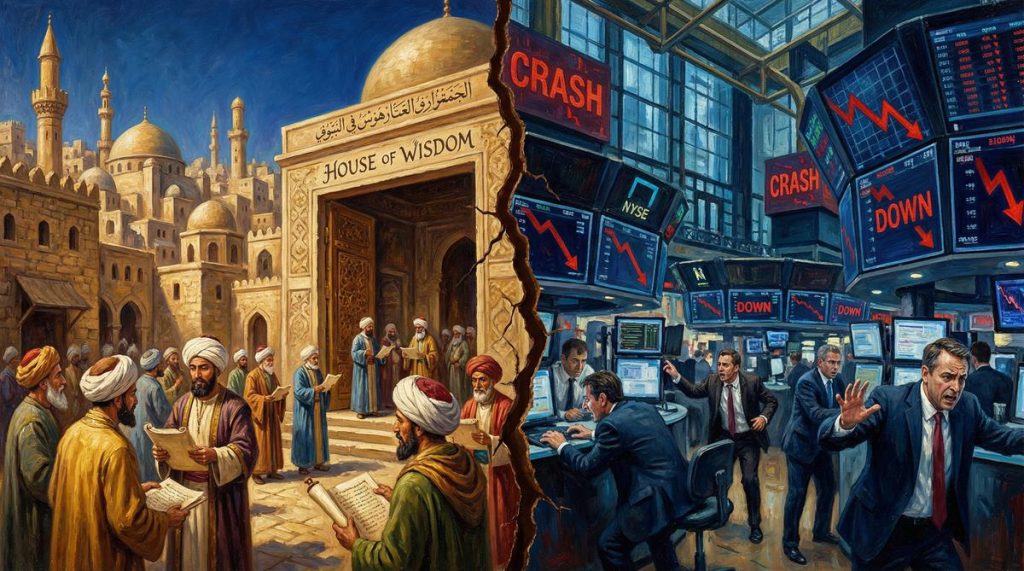
There is a quiet hum of anxiety in the air, a feeling that the intricate systems holding our world together are more fragile than we admit. You hear it in whispers about a coming “Great Economic Crash of 2026,” a perfect storm of record-breaking debt, stubborn inflation, and deep political division. It’s the fear that our modern, sophisticated world—our own House of Wisdom—could shatter not with a whimper, but with a sudden, violent bang.
But this is not a new fear.
History is littered with the ghosts of civilizations that believed they were eternal, right up until the moment they weren’t. And few collapses were as sudden, as total, and as culturally catastrophic as the fall of Baghdad in 1258.
The Jewel of the World
In the mid-13th century, Baghdad was not just a city; it was the center of the known world. For 500 years, it had been the heart of the Abbasid Caliphate, a sprawling empire that stretched from North Africa to Central Asia. It was a city of unparalleled wealth, a global hub of trade, and a beacon of intellectual light.
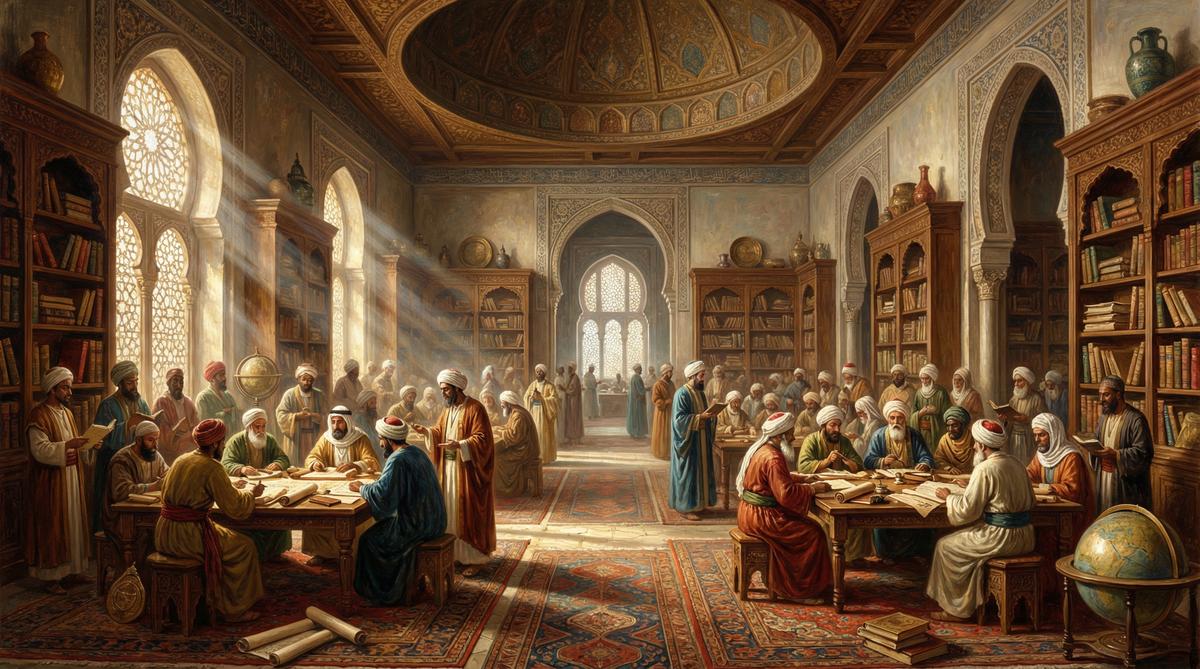
At its core was the legendary House of Wisdom, a library and academy that housed the largest collection of knowledge on the planet. Scholars of every faith and from every corner of the empire gathered there to translate and study the works of the Greeks, the Persians, and the Indians. They made groundbreaking advances in mathematics, medicine, astronomy, and philosophy. Baghdad was the engine of the Islamic Golden Age, a place that seemed as permanent as the stars themselves.
But the foundations were rotting from within.
The Caliph, Al-Musta’sim, was a shadow of his powerful ancestors. He was a weak and decadent ruler, more interested in poetry and courtly pleasures than in the mundane tasks of governance. His administration was rife with corruption and paralyzed by bitter internal rivalries. The once-mighty Abbasid army had been neglected, its strength hollowed out by political infighting and a misplaced sense of security. The Caliph believed his city was impregnable, that no one would dare to strike at the heart of Islam.
He was wrong.
The Storm from the East
On the horizon, a storm was gathering. The Mongol Empire, under the command of Hulagu Khan, a grandson of the legendary Genghis Khan, was a force of nature. The Mongols were a disciplined, ruthless, and unstoppable machine of conquest that had already carved a bloody path across Asia.
In 1257, Hulagu sent an ultimatum to the Caliph: submit to Mongol rule or face utter destruction. Al-Musta’sim, blinded by arrogance and insulated by his fawning courtiers, gave a defiant and insulting reply. He failed to grasp the mortal danger his city was in. He failed to mobilize what was left of his army. He failed, utterly, to prepare.
In January 1258, the Mongol horde, numbering over 150,000 strong, arrived at the gates of Baghdad. The siege was short and brutal. The Mongols’ advanced siege engines, operated by Chinese engineers, quickly breached the city’s ancient walls. Within two weeks, the city that had stood for five centuries was on its knees.
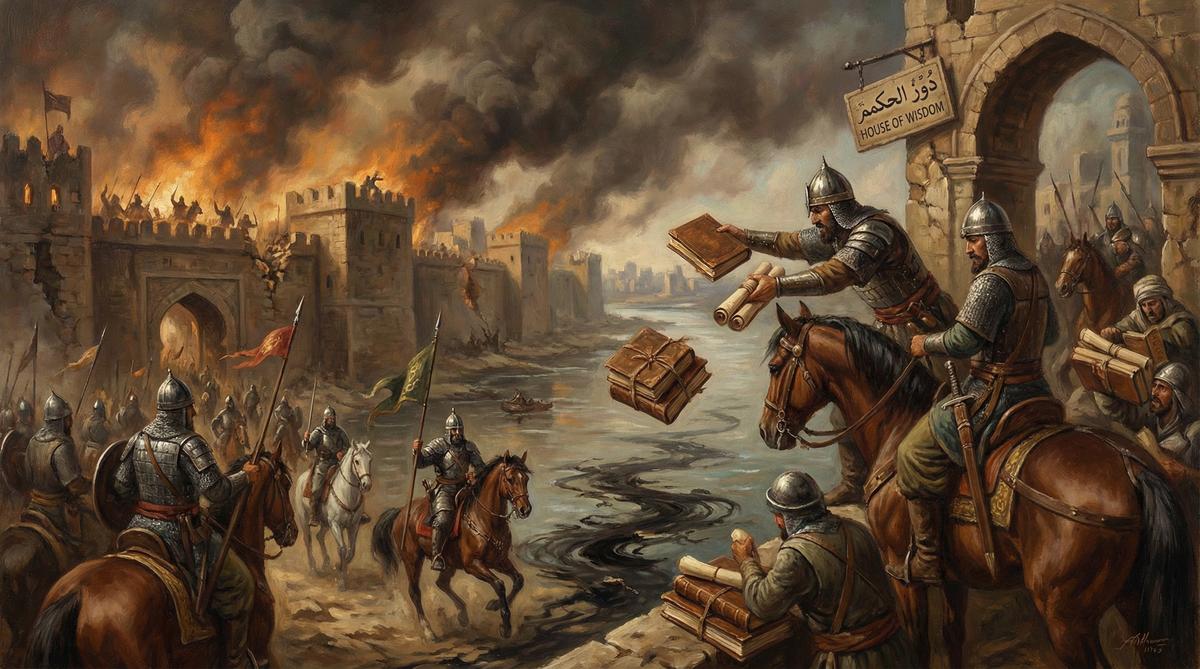
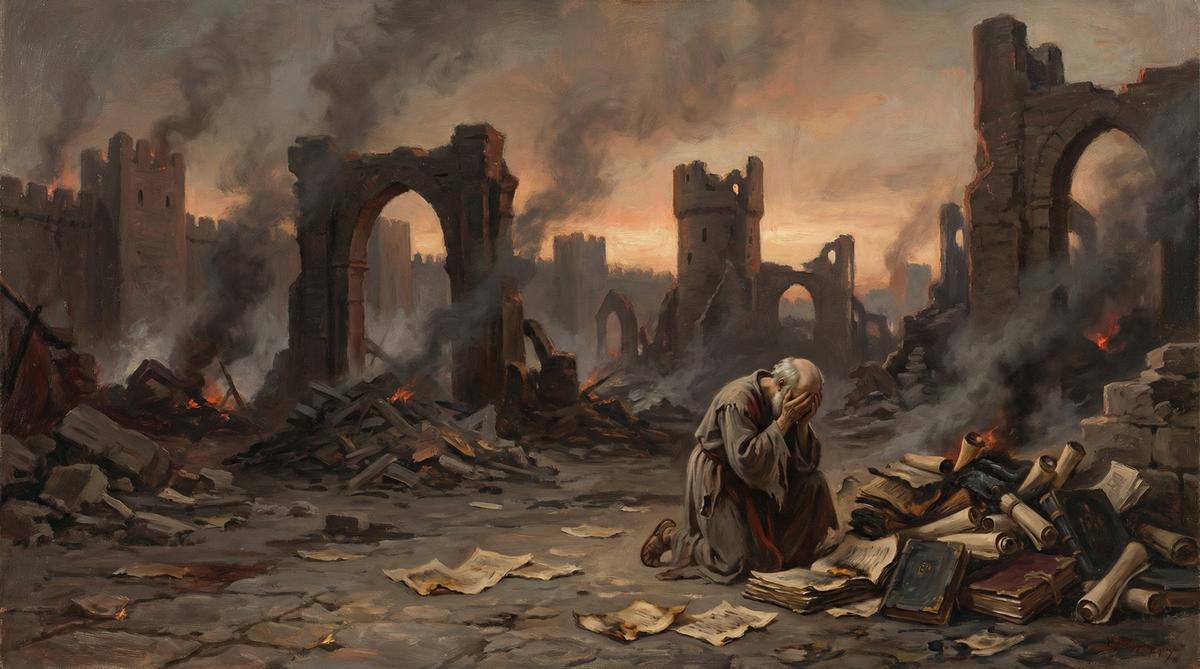
The sack that followed was a week of unimaginable horror. The Mongols poured into the city and unleashed a torrent of destruction. Hundreds of thousands of men, women, and children were slaughtered. The city’s grand mosques, palaces, and hospitals were looted and burned.
But the greatest tragedy was the destruction of the House of Wisdom. The library’s vast collection of books—the accumulated knowledge of generations—was thrown into the Tigris River. It is said that the river ran black with the ink of the dissolving manuscripts, and red with the blood of the slaughtered scholars. The Islamic Golden Age, the brightest intellectual flame in the world, was extinguished in a single, cataclysmic week.
The Echoes of Collapse
The story of Baghdad’s fall is not just a historical tragedy; it is a chillingly relevant warning. The parallels between the complacent Abbasid Caliphate and the anxieties of our own time are impossible to ignore.
Internal Decay and Complacency: Like the Abbasid court, our own institutions are plagued by deep political polarization and a collapse in public trust. We are divided, distracted, and seemingly incapable of addressing the long-term structural problems—like our spiraling national debt—that threaten our stability. We are, in many ways, as complacent as Al-Musta’sim, believing that our system is too big, too important, and too permanent to fail.
A Sudden, External Shock: The Mongols were an external shock that the Abbasids were completely unprepared for. Today, we face a multitude of potential shocks—a financial crisis, a new pandemic, a major geopolitical conflict, a technological disruption we can’t control. A system weakened by internal decay is brittle, and a brittle system shatters when it is hit.
The Destruction of Knowledge: The burning of the House of Wisdom was a deliberate act of cultural annihilation. Today, our “House of Wisdom” is the complex web of institutions, traditions, and shared truths that underpin our society. When we see the erosion of trust in science, the rejection of objective facts for political narratives, and the decay of civil discourse, we are seeing the modern equivalent of books being thrown into the river. A society that loses its shared understanding of reality cannot solve its problems.
The pattern is clear: empires don’t just die. They are hollowed out from the inside until a hard knock from the outside causes them to collapse.
The Action: Building Your Own House of Wisdom
We cannot stop the great tides of history, but we are not helpless. The lesson of Baghdad is not to despair, but to prepare. When the great systems of the world prove fragile, true security is found in self-reliance.
While the world’s leaders bicker and our financial systems creak under the weight of impossible promises, you can take concrete steps to insulate yourself and your family. The most fundamental form of security is the ability to provide for yourself.
That is why we created the 4ft Farm Blueprint. It is a simple, proven system for producing your own food, a tangible asset that no government can devalue and no financial crisis can erase. It is the first and most important step toward building your own personal House of Wisdom—a foundation of security in an uncertain world.
A special report from Shamus Gerry III
For more resources on building a resilient life, explore our network of sites: