The Men With the Swords: How a 1,200-Year-Old Palace Coup Foretold America’s State vs. Federal Nightmare
A special report from Shamus Gerry III
The illusion of control is the most dangerous drug in politics. Leaders, surrounded by the architecture of power—flags, seals, and armed guards—come to believe they are the masters of the state. They forget a terrifyingly simple truth: the state is not an idea. It is a collection of people with weapons. And when those people decide they are no longer loyal, the state ceases to exist. The flags become cloth, the seals become metal, and the leader becomes a target.
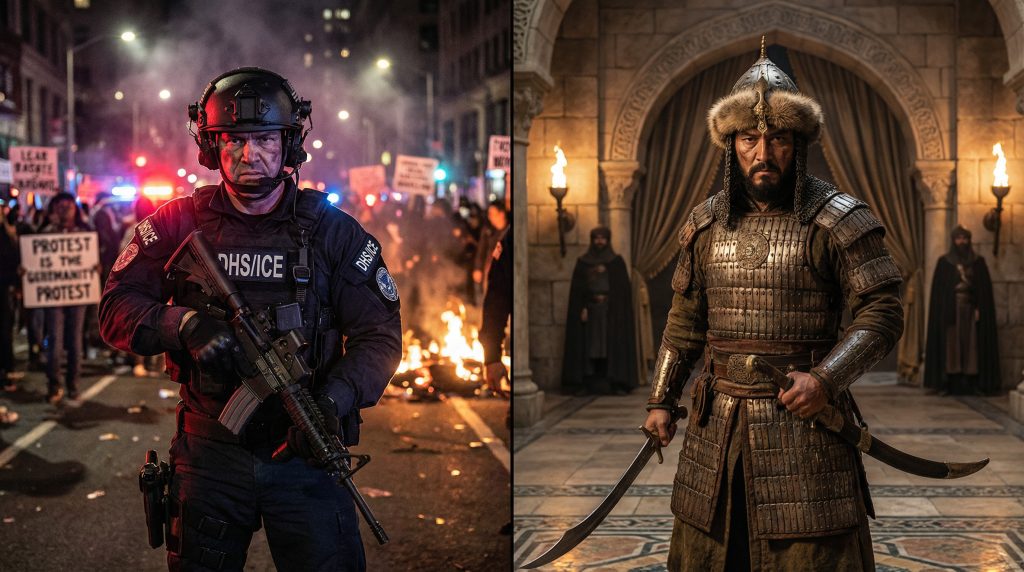
This is the lesson screaming from the headlines in Minnesota. A partial government shutdown has crippled the Department of Homeland Security, not over budgets, but over blood. The killing of two American citizens by federal ICE agents has ignited a firestorm, pitting a defiant state governor against the White House. The governor has placed his National Guard on standby. The President has threatened to invoke the Insurrection Act, preparing to deploy the 11th Airborne Division against American citizens. The unthinkable—a “green-on-green” conflict, American soldiers fighting American soldiers—is now a terrifying possibility. It feels like a uniquely American crisis, a product of our specific, bitter divisions. It is not.
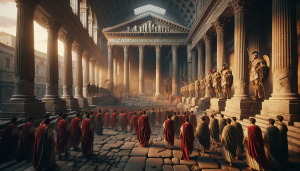
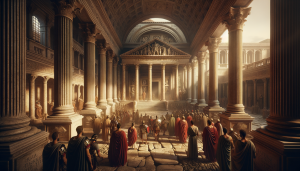
Twelve hundred years ago, in the glittering, purpose-built city of Samarra, the most powerful man in the world, the Abbasid Caliph al-Mutawakkil, learned this lesson in the most brutal way imaginable. He was the “Shadow of God on Earth,” the absolute ruler of an empire stretching from North Africa to Central Asia. But he made a fatal mistake. He forgot who held the swords. The story of his fall and the subsequent “Anarchy at Samarra” is a chilling historical parallel for a nation watching its own security forces turn into a source of internal conflict.
The Gilded Cage: How the Caliphs Built Their Own Executioners
The crisis began not with weakness, but with a search for strength. In the early 9th century, the Abbasid Caliphs, ruling from their capital in Baghdad, grew wary of the native Arab and Persian factions that dominated their armies. To secure their rule, they began importing thousands of Turkic slave-soldiers (ghilman or Mamluks) from the Central Asian steppes. These were men with no local loyalties, no family ties within the empire. Their only allegiance was supposed to be to the Caliph who owned them. They were the ultimate praetorian guard, a force designed to be ruthlessly loyal and effective.
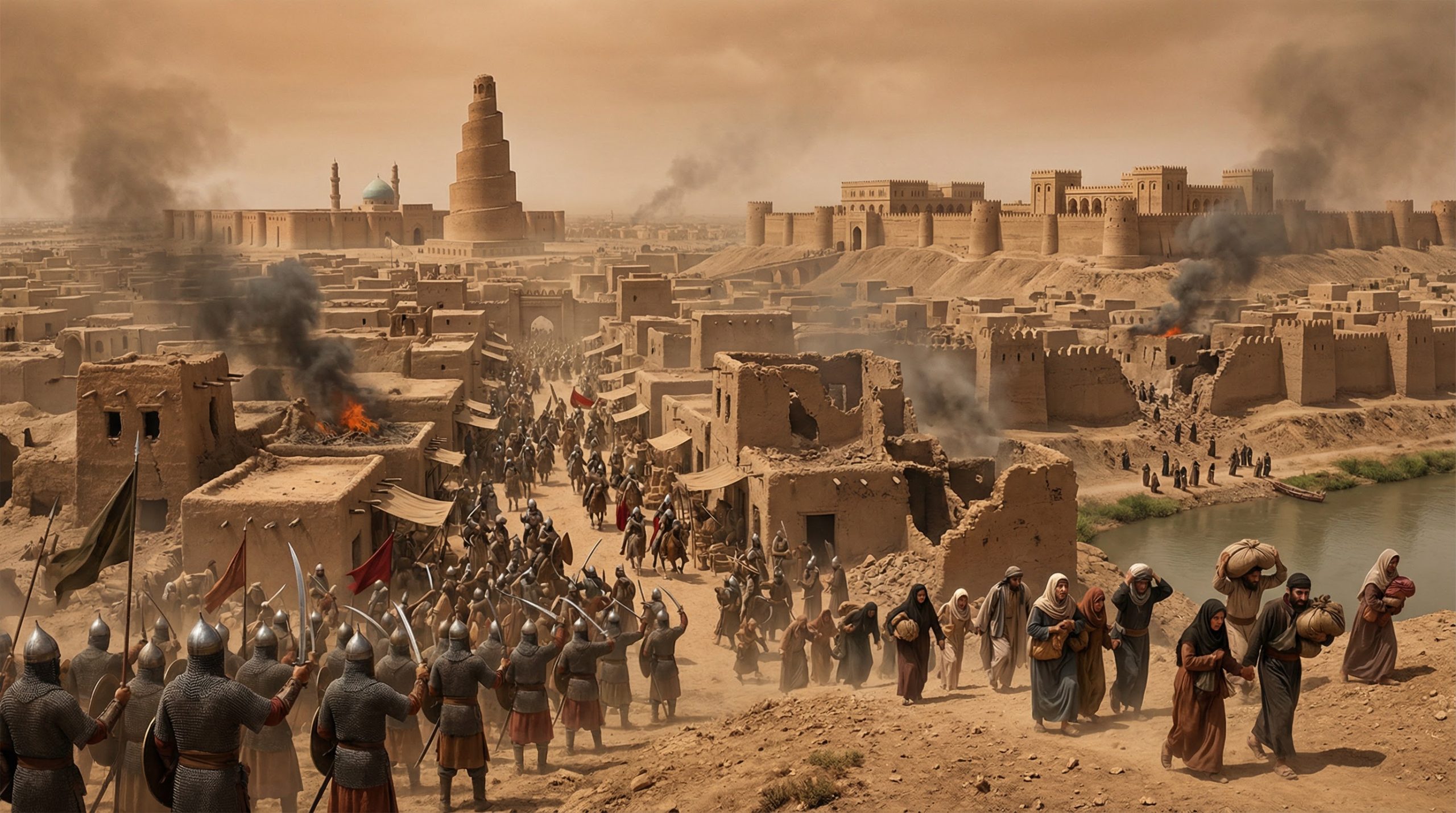
The Caliph al-Mu’tasim (833-842 CE) expanded this force dramatically and, to house them away from the restive population of Baghdad, moved the entire capital to a massive new city, Samarra, in 836 CE. It was a city built for the military, a sprawling complex of palaces, mosques, and barracks. But in isolating his guards, the Caliph also isolated himself. He and his successors became prisoners in a gilded cage, surrounded by a powerful, cohesive military caste that was increasingly aware of its own strength. The Turkic generals began to dominate the administration, control the treasury, and see themselves not as servants, but as the true power behind the throne.
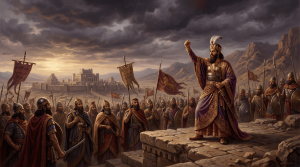
Caliph al-Mutawakkil, who came to power in 847 CE, recognized the danger. He attempted to reassert caliphal authority, playing different factions against each other and trying to build up alternative power bases. He planned to move the capital again, away from the suffocating influence of the Turks. But it was too late. The men with the swords had already decided his fate.
The Night of the Assassination: The State Turns on Its Master
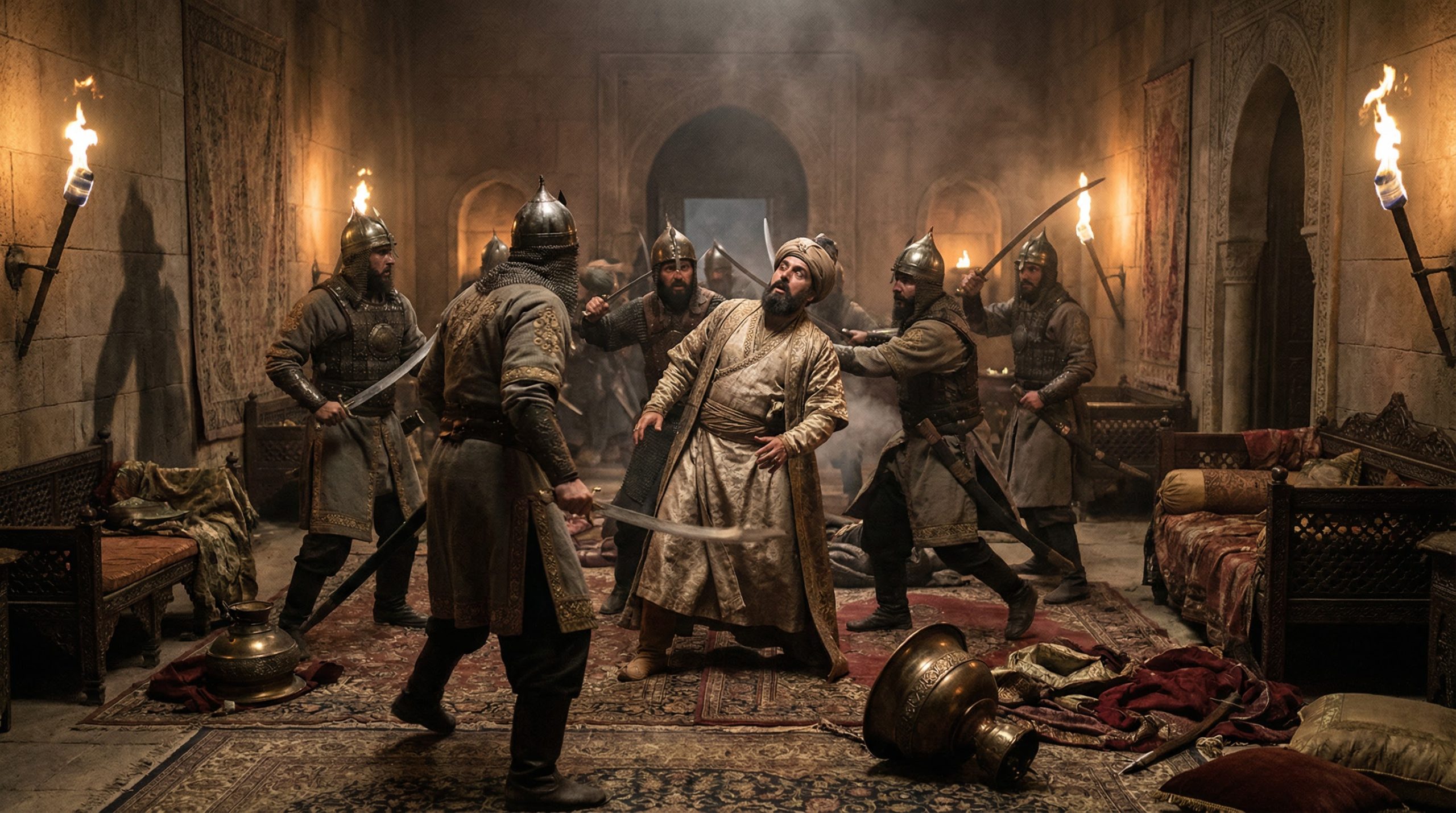
On the night of December 11, 861 CE, a group of Turkic officers, in collusion with the Caliph’s own son, al-Muntasir, stormed the palace. Al-Mutawakkil was relaxing with a few close companions when the assassins burst in. The Caliph, who had spent his reign in opulent luxury, was cut down by the very men who were paid to protect him. His chief minister was murdered alongside him. The state had devoured its head.
The assassination triggered the “Anarchy at Samarra,” a nine-year period of unimaginable chaos. The Turkic generals became the ultimate kingmakers. They installed al-Muntasir as the new Caliph, but he died just six months later, likely poisoned. The generals then picked his successor, al-Musta’in. When he displeased them, they besieged him in Baghdad, forced his abdication, and then executed him anyway. They installed al-Mu’tazz, who was later tortured to death when he couldn’t pay their exorbitant salaries. His successor, al-Muhtadi, was also murdered. In nine years, four Caliphs were put on the throne and then violently dispatched by their own security forces. The central government ceased to function. Tax revenues from the provinces dried up as local governors, seeing the chaos in the capital, declared their independence. The mighty Abbasid Caliphate, the world’s superpower, had been broken from within.
The Lesson: When the Guards Become the Government
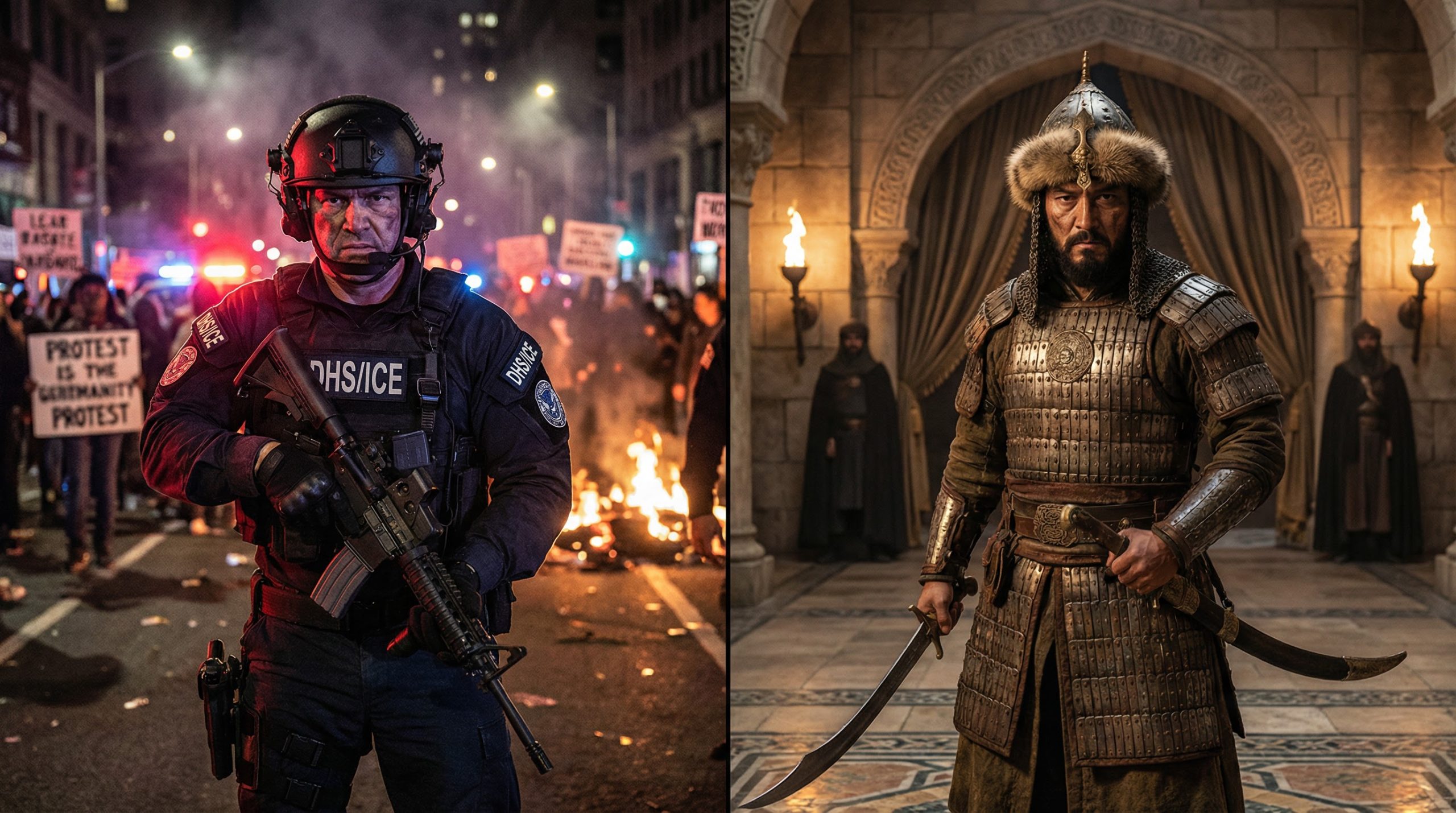
The horror of Samarra is a lesson written in blood. When a government creates a security force that is insulated from the general populace and unaccountable to the rule of law, it creates the instrument of its own destruction. The Turkic guards, like the federal agents in Minnesota, began to operate as a power unto themselves. Their actions, once seen as enforcing the state’s will, were now perceived as the will of a hostile, occupying force. The killing of Caliph al-Mutawakkil was the ultimate expression of this breakdown—the moment the tool turned on its master.
Today, in America, we see the echoes of this disaster. A federal agency, ICE, acts with lethal force against citizens, sparking a crisis of legitimacy. A state government, feeling its people are under attack, mobilizes its own armed force, the National Guard, in defiance. The President, the modern Caliph, threatens to send in the regular army to crush this defiance. The very forces designed to protect the nation are now poised to tear it apart. The chain of command is fracturing. The monopoly on violence, which is the bedrock of any stable state, is being contested.
The Action: The Only True Security is Self-Reliance
When the government’s own armed factions are at each other’s throats, who can you rely on for your safety? When the state itself becomes the source of violence and instability, the only rational response is to build your own security, your own independence. The lesson of Samarra, and the unfolding crisis in Minnesota, is that centralized power is a fragile illusion. True security doesn’t come from a distant capital; it comes from your own land, your own skills, and your own community.
This is not a theoretical exercise. For years, we have been warning about the fragility of the systems we depend on. Now, that fragility is on full display. The time for depending on Washington is over. The time for building your own resilient life is now. That is why we have spent years developing the 4ft Farm Blueprint. It is a complete, step-by-step guide to creating a source of food and independence for your family, a small piece of sanity in a world gone mad. It is not just about gardening; it is about declaring your independence from a broken system.
To understand the full scope of the challenges we face and the solutions available, explore our network of resources:
- HomesteaderDepot.com: Tools and knowledge for the self-reliant life.
- SelfRelianceReport.com: In-depth analysis of the threats to our freedom.
- SurvivalStronghold.com: Strategies for protecting your family in a crisis.
- SevenHolistics.com: Health independence from a broken medical system.
The events in Samarra were a warning. The events in Minnesota are a wake-up call. Do not hit the snooze button.