
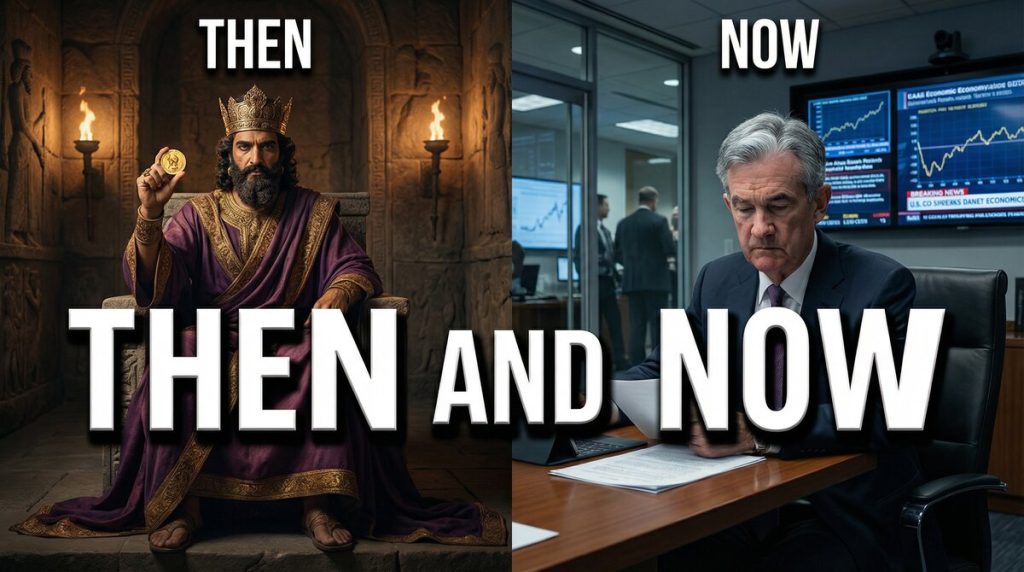
In the marbled halls of power, where ambition and authority collide, history doesn’t just rhyme; it screams warnings. And this week, as the U.S. Supreme Court weighs a case that could shatter the bedrock of American economic stability, a 2,500-year-old echo from the heart of the Persian Empire is roaring back to life.
On January 27, 2026, the highest court in the land heard arguments in a case that pits the raw power of the executive against the carefully constructed independence of the Federal Reserve. President Trump’s unprecedented attempt to fire Federal Reserve Board Member Dr. Lisa Cook has ignited a constitutional firestorm. Fed Chair Jerome Powell himself has called it “the most important legal case in the Fed’s history,” a battle for the soul of the institution that guards the nation’s currency.
But this is not a new story. It is a timeless struggle, a pattern of power that has played out in empires across millennia. To understand the true stakes of this modern crisis, we must journey back to the dawn of the Persian Empire and a king who faced the very same dilemma: how to control the uncontrollable.
## The Time Portal: Darius the Great and the Satrap Dilemma
Our story begins in 522 BCE with Darius I, known to history as Darius the Great. He seized the Persian throne in a bloody coup, inheriting a sprawling empire stitched together from dozens of conquered kingdoms. To govern this vast and diverse realm, he relied on a system of regional governors known as **satraps**.
These satraps were kings in all but name. They commanded armies, collected taxes, and managed the economies of their provinces with near-total autonomy. They were the essential gears in the imperial machine, but their very independence made them a constant threat. Darius knew he needed them, but he also knew he couldn’t fully trust them.
His solution was a brilliant and audacious power play: a single, unified currency. He introduced the **Daric**, a gold coin of standardized weight and purity, and demanded its use across the empire. It was more than just money; it was a declaration of central authority, a tool to subordinate the powerful satraps to his will. By controlling the currency, he sought to control them.
## The Parallel Revelation: A King’s Decree, A President’s Tweet
The mechanism of conflict is identical. Just as Darius used the Daric to centralize economic power, modern presidents have long sought to influence the Federal Reserve’s monetary policy. The Fed, like the ancient satrapies, was designed to be independent, a bulwark against the whims of political leaders.
President Trump’s attempt to remove Dr. Cook is the modern equivalent of Darius dispatching soldiers to a rebellious satrap’s palace. The charge against Cook—alleged mortgage fraud—is the “for cause” justification, just as Darius would accuse a defiant satrap of “treason” or “corruption.”
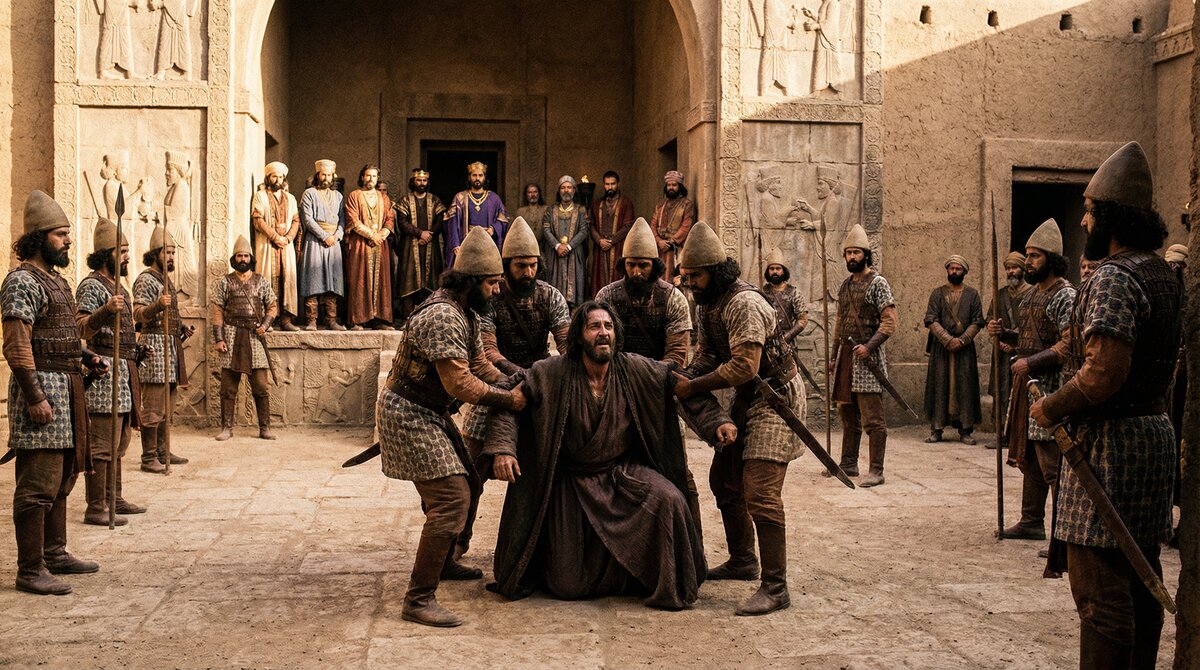
One of the most dramatic examples of this was the fate of **Oroetes**, the powerful satrap of Sardis. Oroetes had grown too powerful, ignoring Darius’s decrees and even murdering a neighboring satrap. Darius, unable to challenge him openly, sent an agent with a series of royal decrees. The agent, Bagaeus, first read decrees on other matters to test the loyalty of Oroetes’s guards. When they showed deference to the king’s authority, Bagaeus delivered the final, fatal message: “King Darius forbids you to be Oroetes’ guard.” The guards immediately lowered their spears, and Oroetes was executed on the spot.
This was the ultimate assertion of central power, a chilling demonstration that no satrap was truly independent. But it was a victory that came at a terrible cost.
## The Ancient Warning: A Cascade of Rebellion
Darius’s crackdown on the satraps did not create stability. It created fear. And fear, in the halls of power, breeds rebellion. The very act of trying to control the satraps made them more desperate to secure their own power.
The decades and centuries that followed were marked by constant, draining satrap revolts. The most famous, the **Revolt of the Satraps** in the 360s BCE, saw nearly all the western provinces rise up against the king. The empire was paralyzed, unable to respond to external threats as it was consumed by internal conflict. The system’s greatest strength—its decentralized network of powerful governors—had become its fatal weakness.
The constant infighting bled the empire dry, weakening it from within. When Alexander the Great arrived a generation later, he didn’t conquer a mighty, unified empire. He toppled a house of cards, its foundation rotted by centuries of internal distrust and power struggles that began with a king’s desire for absolute control.
## Pattern Recognition: The Unraveling of Trust
The lesson of Persia is a stark warning for America today. An independent Federal Reserve is not a bug in our system; it is the essential feature. It was created to prevent politicians from manipulating the money supply for short-term political gain—the very temptation that led to the debasement of Rome’s currency and the collapse of countless other empires.
When a president attempts to remove a Fed governor, it sends a shockwave through the entire financial system. It signals that the institution is no longer independent, that its decisions can be subject to political pressure. This erodes the trust that underpins the value of our currency. If the Fed is seen as just another political tool, the dollar’s status as the world’s reserve currency is in grave danger.
The crisis with Dr. Cook is not just about one person. It is about the integrity of the entire system. Like Darius’s execution of Oroetes, it is a move that may secure short-term control but at the cost of long-term stability. It is the first crack in the foundation of an economic empire.
## 5 Things You Must Do to Protect Yourself from Institutional Decay
History teaches us that when institutions begin to crumble, the consequences are felt by ordinary people first. The value of your money, the stability of your job, and the security of your future are all at risk. Here is what you can do to prepare.
1. **Build Your Food Independence.** When currencies collapse, food becomes the ultimate currency. The revolts in Persia were often sparked by economic hardship. Don’t be at the mercy of a fragile system. The **[4ft Farm Blueprint](https://4footfarmblueprint.com/offer)** shows you how to create a resilient, independent food supply for your family.
2. **Gain Essential Knowledge.** In times of crisis, knowledge is power. Understanding the patterns of history and the principles of preparedness is your greatest asset. **[Survival Stronghold](https://survivalstronghold.com)** provides the expert guidance you need to navigate the challenges ahead.
3. **Master Self-Reliance Skills.** The ability to provide for yourself and your family is the ultimate form of security. The **[Self Reliance Report](https://selfreliancereport.com)** is your guide to the practical skills that matter most when systems fail.
4. **Fortify Your Health.** Economic and political stress takes a toll on your health. An independent approach to wellness is crucial. **[Seven Holistics](https://sevenholistics.com)** offers natural, effective strategies to maintain your physical and mental resilience.
5. **Embrace the Homesteading Mindset.** True security comes from reducing your dependence on fragile, centralized systems. **[Homesteader Depot](https://homesteaderdepot.com)** is your resource for everything you need to build a more independent and resilient life.